Agent Integrations and APIs
Connecting agents to the systems a business already runs. These pages cover REST and webhook integration, tool calling and structured output, event-driven triggers, no-code connectors, and the specifics of wiring an agent into a CRM, a drive, a ticketing system, or a data warehouse. Fast.io exposes a REST API at https://api.fast.io/current/, a CLI published on npm as @vividengine/fastio-cli, and a remote MCP server. There is no language SDK, so integration code here is ordinary HTTP in whatever language you already use.
The pages assume you are connecting two systems that both already exist and neither will change to suit you. They cover authentication, retries and idempotency, rate limits, and what to do when the other side is slower or less reliable than your agent expects it to be. Code samples use plain HTTP against a documented endpoint, because that is what actually exists to call.
96 guides in this topic.
Start here
Best Web Scraping Tools for AI Agents
AI agents need web scraping tools that output token-efficient formats like Markdown instead of raw HTML. We tested the top solutions including Firecrawl, Jina Reader, and Crawl4AI to help you build better data pipelines for your LLMs.
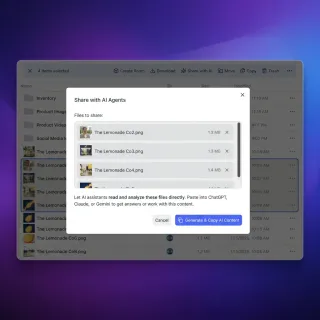
Top 7 Discord AI Integrations for Communities in 2026
Discord servers have grown beyond simple chat rooms. With AI tools like Midjourney for art or Fastio for agent memory, you can automate moderation, answer questions, and engage members. These are the top 7 AI tools for Discord servers in 2025.

Best API Gateways for AI Agents
AI agents make hundreds of LLM calls per task, and each call costs money, adds latency, and creates a failure point. API gateways built for AI traffic handle problems that generic gateways ignore: token-based rate limiting, semantic caching, model failover, and per-agent cost tracking. This guide compares eight gateways that solve these problems, with a focus on streaming support and token usage visibility.

Best n8n Tools for AI Agents: Top 10 Nodes for 2026
n8n changed AI automation with its visual workflow builder. We rank the best nodes and integrations for building autonomous agents, from LLMs like OpenAI to memory tools like Pinecone and storage solutions like Fastio.

8 Best Webhook Platforms for AI Workflows (2026 Guide)
Webhook platforms for AI workflows provide reliable event delivery, payload transformation, and retry logic to connect AI agents with external systems. We evaluated top solutions including Hookdeck, Svix, Trigger.dev, and Fastio event-driven storage to help you build reliable, event-driven AI applications that scale.

How to Choose the Best Payment APIs for AI Agents (2026)
Payment APIs for AI agents enable autonomous software to send and receive funds programmatically without human intervention. As the agentic economy grows, specialized tools from Stripe, Coinbase, and new Web3 protocols are replacing traditional checkout flows. Here are the top multiple payment solutions for autonomous agents in multiple.
All guides
8 Best Webhook Platforms for AI Workflows (2026 Guide)
Webhook platforms for AI workflows provide reliable event delivery, payload transformation, and retry logic to connect AI agents with external systems. We evaluated top solutions including Hookdeck, Svix, Trigger.dev, and Fastio event-driven storage to help you build reliable, event-driven AI applications that scale.

9 Best AI Tools for Therapists in 2026
Behavioral health clinicians spend roughly 35% of their working hours on documentation, and charting ranks as the single biggest driver of therapist burnout. Nine AI tools now target that problem directly, from ambient note generators to outcome trackers and file management platforms. This guide compares pricing, privacy practices, and clinical workflow fit for each one, focusing on tools therapists use in clinical work rather than consumer mental health apps.

Best AI Image Generation APIs for Agents in 2026
AI agents need image generation APIs that go beyond pretty outputs. They need predictable pricing, async processing, webhook callbacks, and storage integration to run without human supervision. This guide evaluates 9 APIs on the criteria that matter for autonomous workflows: latency, batch support, rate limits, output formats, and how easily agents can store and distribute generated images.
Best API Gateways for AI Agents
AI agents make hundreds of LLM calls per task, and each call costs money, adds latency, and creates a failure point. API gateways built for AI traffic handle problems that generic gateways ignore: token-based rate limiting, semantic caching, model failover, and per-agent cost tracking. This guide compares eight gateways that solve these problems, with a focus on streaming support and token usage visibility.
Best APIs for Autonomous Agents: Essential Toolkit
Autonomous agents need more than just intelligence; they need tools to interact with the world. While Large Language Models (LLMs) provide the brain, APIs provide the eyes, ears, and hands.

Best Event-Driven Tools for AI Agents (2026 Guide)
Event-driven tools for AI agents provide message brokers, event sourcing, and reactive frameworks that enable agents to respond to real-time events and maintain consistent state. This guide reviews the top 8 tools for building scalable, responsive agentic workflows.
Best n8n Tools for AI Agents: Top 10 Nodes for 2026
n8n changed AI automation with its visual workflow builder. We rank the best nodes and integrations for building autonomous agents, from LLMs like OpenAI to memory tools like Pinecone and storage solutions like Fastio.
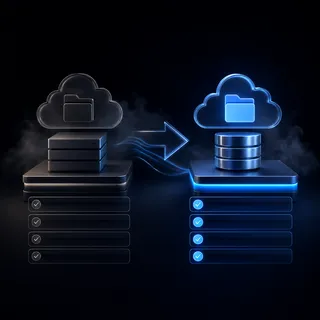
Best Notion AI Alternatives for Teams in 2026
Notion moved full AI access behind its $20/user/month Business plan in 2025, pushing many teams to look elsewhere. This guide compares eight AI workspace tools across search, writing, project management, and pricing to help you find the right fit without overspending.
Best Transcription APIs for AI Agents: Real-Time Voice Processing
Choosing the right transcription API for your AI voice agent determines whether conversations feel natural or frustratingly delayed. This guide compares the top speech-to-text providers by latency, accuracy, and cost to help developers build production-ready voice agents.
Best Video Processing APIs for AI Agents: Analysis, Transcription, and Generation
Video processing APIs let AI agents analyze, transcribe, and generate video content at scale.
Best Web Scraping Tools for AI Agents
AI agents need web scraping tools that output token-efficient formats like Markdown instead of raw HTML. We tested the top solutions including Firecrawl, Jina Reader, and Crawl4AI to help you build better data pipelines for your LLMs.
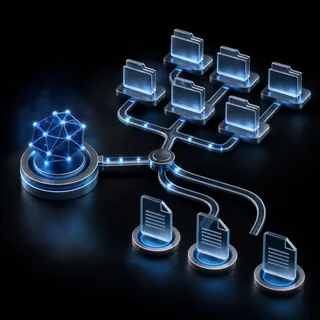
Default SFTP Port Setup and Configuration for Automated Agent Workspaces
Setting up and configuring a custom SFTP port helps minimize automated scan traffic and brute-force attempts on agent host servers. However, self-managed SFTP configurations create outbound firewall issues for agent runners and lack the version control needed for multi-agent environments. Fast.io resolves these issues by replacing SFTP with secure, persistent workspaces accessible via the Model Context Protocol.
Fastio API Django Integration Guide: Complete Setup
Integrating Fastio API with Django allows developers to manage agentic workspaces directly from their web application backend. This guide provides a comprehensive walkthrough for configuring the Fastio Python SDK within a Django project. We cover synchronous API calls, robust asynchronous workflows using Celery, and how to harness built-in intelligence directly from your Python backend.
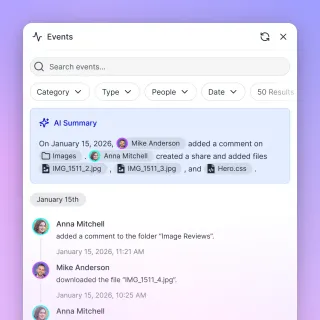
Fastio API Integration Tutorial for Java Spring Boot
A reliable Fastio API integration tutorial for Java Spring Boot allows enterprise backends to securely manage agentic workspaces and scalable file storage. This detailed guide covers authentication, connection pooling, and retry mechanisms for production environments. You will learn to build a resilient integration that connects your Spring Boot application to Fastio's multiple MCP tools and built-in intelligence features, enabling collaboration between human teams and AI agents.

Fastio API Presigned URLs Implementation Guide
Fastio API presigned URLs allow your applications to grant secure, time-limited, direct access to files without proxying the heavy traffic through your own backend servers. Ideal for handling large file uploads from clients or AI agents, this method reduces server bandwidth costs and prevents your primary infrastructure from choking on multi-gigabyte streams.
Fastio API vs Google Drive API for AI Agents
When building autonomous systems, developers must choose the right storage layer for their AI agents. While the Google Drive API was built for human file synchronization, the Fastio API is purpose-built for agentic access, offering native Model Context Protocol (MCP) support and programmatic data rooms. This technical comparison evaluates both APIs based on authentication complexity, rate limits, and multi-agent collaboration features.

Fastio API vs Hugging Face Hub for Agent Datasets
Hugging Face Hub handles huge, static ML datasets well. Fastio API serves a different purpose: managing the fast read-write memory that active AI agents need. While Hugging Face uses Git LFS to lock in training epochs, Fastio delivers sub-second workspace syncs and built-in RAG. This setup supports live workflows and agentic coordination without delays.

Fastio API vs Pinecone: Best Context Storage for Agents
Guide to fastio api pinecone agent context: When building AI agents, your context storage architecture determines how well your models reason over enterprise data. Pinecone provides a vector database for similarity search. Fastio offers a file-based intelligent workspace. This comparison explores whether your agents need raw files or just embeddings to perform at their best.
How to Automate File Ownership Transfer with Fastio API
Automating file ownership transfer with the Fastio API lets AI agents securely deliver finished assets to human clients with one API call. Programmatic ownership transfer moves the entire workspace to the client, transferring billing and access rights automatically while letting agents keep administrative access to continue working.

How to Automate Perplexity Personal Computer with Zapier
Perplexity Personal Computer gives you an always-on AI research agent that runs continuously on your behalf. Zapier connects Perplexity to 7,000+ apps through no-code automation workflows called Zaps. This guide covers how to wire the two together, build practical automations, and solve the file persistence problem that trips up most setups.

How to Automate Perplexity Personal Computer Workflows with n8n
Perplexity Personal Computer is an always-on AI agent with access to your local files and apps. n8n is an open-source workflow automation platform that connects to Perplexity via its Sonar API, letting you trigger research, route outputs, and build multi-step pipelines. This guide walks through the setup, practical workflows, and how to solve the file persistence gap between runs.

How to Automate the Fastio API Ownership Transfer Workflow
Ownership transfer via the Fastio API enables autonomous agents to securely hand off completed workspaces and files to human users. While other platforms struggle with agent-to-human workflow completion, Fastio provides a native protocol for handoffs. This guide walks developers through the exact API steps required to automate ownership transfers while maintaining administrative access for future tasks.
How to Automate User Offboarding with Fastio API
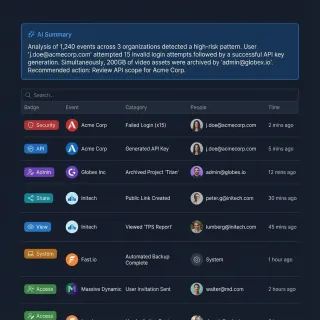
Automating user offboarding with the Fastio API lets you revoke access and transfer file ownership instantly. Manual offboarding leaves orphaned files and creates security gaps. A simple API script lets developers terminate sessions, reassign assets created by agents, and maintain clear audit logs. This guide shows the exact API sequence you need to build a reliable offboarding workflow for both humans and AI agents.

How to Build a Discord AI Agent with the Fastio API
Building an intelligent Discord bot often means hitting a wall: Discord restricts free users to multiple file uploads. This constraint blocks bots designed to process large datasets, videos, or extensive documentation. By integrating the Fastio API, Discord AI agents can accept large document uploads, process them, and return high-resolution outputs via secure shared links.

How to Build a Fastio API Folder Structure
Manually creating workspaces slows down development and client onboarding. A Fastio API folder structure creation guide shows you how to automate this setup. By scripting programmatic folder creation in Fastio, development teams can instantly build nested directory trees. This approach keeps project layouts consistent and reduces manual errors.
How to Build a Fastio API Golang Implementation
Building a Fastio API Golang implementation allows developers to manage workspaces, upload files concurrently, and coordinate AI agents at scale. This practical guide covers authentication strategies, multipart uploads using Go's native goroutines, and patterns for interacting with the agentic storage platform.

How to Build a Fastio API Integration With Remix Applications
Guide to fastio api integration with remix applications: Integrating Fastio with Remix means using server-side Action functions to parse multipart data and connect to the Fastio API. By streaming file uploads directly from your Remix server to Fastio's chunked upload endpoints, you bypass local memory limits and keep your application running fast.

How to Build a GraphQL Wrapper for the Fastio API
A GraphQL wrapper for the Fastio API allows developers to fetch specific file data, metadata, and workspace details in a single query, simplifying frontend data fetching. By preventing over-fetching, GraphQL can significantly reduce API payload sizes. This guide covers how to structure your schema, resolve complex nested queries, handle authentication securely, and works alongside Fastio's REST endpoints for React and Apollo client users.

How to Build a Headless CMS with Fastio API
Building a headless CMS with Fastio API allows developers to use scalable workspaces and file metadata to serve structured content to any frontend framework. By using direct API access, teams can eliminate the need for managing complex database backends for digital assets while gaining the flexibility of multi-channel content delivery. This guide walks you through the architectural steps to set up your workspace, define metadata, upload content, and fetch it securely.

How to Build Agent Workspaces: Fastio API Quickstart
The Fastio API lets developers programmatically create and manage intelligent agent workspaces. Instead of treating storage as a passive repository, this framework provides a persistent coordination layer for autonomous AI systems. With a consolidated MCP toolset, built-in Retrieval-Augmented Generation (RAG), and direct URL imports, you can set up a working intelligent workspace in under five minutes.
How to Build an AI Agent Notion Integration for File Management
AI agent Notion integration enables autonomous agents to read, create, and manage pages, databases, and file attachments in Notion workspaces. This guide explains how to use Notion as a shared knowledge base and delivery surface for agent workflows while overcoming common API limitations.

How to Build Event-Driven Agent Workflows with Fastio Events
Fastio enables event-driven agent workflows the moment a file changes through real-time WebSocket event feeds and activity polling over the REST API. This guide explains how to stream real-time file updates, bridge events, and coordinate autonomous AI systems.
How to Build Event-Driven AI Agent Architectures
Event-driven architecture allows AI agents to react instantly to changes instead of wasting resources on polling. This guide explores how to build reactive agent systems that scale, reducing latency by up to 90% while handling complex file and data workflows.

How to Build Fault-Tolerant AI Agents with Temporal
Temporal gives AI agents something they badly need: the ability to survive failures mid-execution and pick up exactly where they left off. This guide walks through integrating AI agents with Temporal workflows, covering architecture decisions, storage patterns for agent artifacts, and the practical steps to move from a fragile script to a production-grade system.
How to Build Multi-Modal Agent Workflows Using the Fastio API
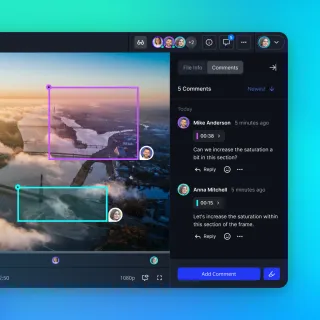
The Fastio API helps developers build multi-modal agent workflows. It provides high-throughput storage and streaming for large video, audio, and image datasets. Multi-modal models need larger file payloads than text models, which often slows down inference on standard cloud storage. This guide shows how to scale vision and audio agents using chunked uploads, signed URLs, and native CDN delivery.

How to Choose the Best Flowise Integrations (2025 Guide)
Flowise integrations link your AI models to the real world, connecting the no-code builder to external tools, APIs, and databases. With these connections, developers can build agents that do more than just chat. They can take action, store complex data, and interact with live production systems. We look at the top integrations that turn basic chatbots into autonomous agents.
How to Choose the Best Payment APIs for AI Agents (2026)
Payment APIs for AI agents enable autonomous software to send and receive funds programmatically without human intervention. As the agentic economy grows, specialized tools from Stripe, Coinbase, and new Web3 protocols are replacing traditional checkout flows. Here are the top multiple payment solutions for autonomous agents in multiple.
How to Connect AI Agents to APIs: Integration Guide
AI agent API integration connects autonomous agents to external services through REST APIs, MCP servers, or SDKs, enabling agents to read data, write files, manage resources, and interact with production systems. Most production agents connect to multiple external APIs. This guide covers authentication patterns, multi-service integration strategies, and the three primary approaches: REST APIs, Model Context Protocol (MCP), and native SDKs.
How to Connect AI Agents to File Storage: Fastio vs Graph API
Building AI agents that can securely read, write, and manage files requires choosing the right API foundation. The Microsoft Graph API connects enterprise data, but the Fastio API provides a specialized, MCP-native environment designed specifically for agent-driven file workflows. This guide compares both platforms to help developers evaluate authentication speed, storage limits, and overall architecture for autonomous systems.
How to Connect AI Agents to Webhooks
Webhooks let AI agents react instantly to real-world events. Instead of checking for updates every minute, agents wait for a trigger. This makes them faster and cheaper to run. This guide shows you how to build event-driven agents that respond immediately to data changes.

How to Connect Google Drive to ChatGPT: Setup and Agent Workspaces
Connecting Google Drive to ChatGPT allows the model to access, read, and reason about files stored in your cloud drives. This guide explains how to connect Google Drive to ChatGPT using direct integrations or a dedicated workspace using Fastio to prevent API timeouts and session disconnects.

How to Connect the Fastio API to OpenAI Assistants
Connecting Fastio to OpenAI Assistants gives your agents direct access to persistent file workspaces, skipping manual uploads. This setup lets development teams build agents that can securely read, analyze, and modify files stored in Fastio. By wiring up this connection, you bypass basic file upload limits and link your centralized storage directly to OpenAI's native code interpreter and retrieval tools.

How to Duplicate a Folder in Google Drive
Google Drive does not offer a native button to duplicate folders. To duplicate directory structures, users must rely on manual file copying, Google Drive for Desktop sync, or Google Apps Script. This guide explains how to perform each duplication method, addresses the permissions risks of shared folders, and shows how programmatic workspaces coordinate these files.

How to Find and Use Google Drive Folder IDs in Agent Workflows
Using raw Google Drive folder IDs in agent configuration or system prompts exposes workspaces to prompt injection and resource traversal attacks. This guide details how to extract folder IDs from browser URLs, resolve them programmatically via the Google Drive API, and secure agent workflows using isolated workspaces and the Model Context Protocol.

How to Find Google Drive Folder Size (And Optimize Workspace Storage)
Google Workspace supports over 3 billion monthly active users. However, Google Drive leaves folder size fields blank because it treats folders as database labels rather than physical directories. For developer teams running autonomous agents in shared rooms, this missing metric creates critical API rate limit bottlenecks. This guide explains how to calculate Google Drive folder sizes using five workarounds and how dynamic workspace storage solves this problem for collaborative agent teams.

How to Handle Event Idempotency with Fastio API
Event idempotency ensures that if an event message is received or processed multiple times during network retries, your system processes the intended action exactly once. When bridging Fastio real-time file feeds to downstream agent workflows, deduplication prevents runaway token burn and duplicate jobs. This guide covers how to track event IDs and manage state safely.
How to Handle Fastio Event Delivery Failures
Managing Fastio file events reliably requires using the WebSocket events feed and activity polling rather than outbound webhooks. Proper event handling ensures complete processing of real-time file uploads and edits. For developers building reactive workflows, missing a single event can lead to fragmented state and broken AI agents. Learn how to reconcile missed events by polling the Fastio audit log and building systems that never drop critical updates.
How to Handle Fastio Realtime Events with NestJS
Consuming Fastio real-time events with NestJS enables instant responses to file uploads, modifications, and access events in your workspaces. A NestJS event service connects to Fastio's WebSocket events feed or polls the activity feed to coordinate AI agents. This guide covers project setup, event listeners, controller logic, and production best practices.
How to Handle Fastio Realtime Events with Node.js Express
Handle Fastio real-time file notifications in Node.js Express using WebSocket feeds and activity polling. Build reactive agent architectures without webhooks. This guide covers prerequisites, Express server setup, WebSocket event streaming, local development, and production best practices.

How to Handle Fastio Realtime Events with Python FastAPI
Handle Fastio real-time file updates in FastAPI using WebSocket event feeds or activity polling. Build reactive AI agent workflows with asynchronous background tasks.

How to Handle Stripe Events for Fastio File Delivery
Guide to handling Stripe events for Fastio file delivery: Automating digital product delivery is faster when payment processing and cloud storage work together. By handling Stripe webhook events and connecting them to Fastio via the REST API, developers can trigger file operations the moment a payment succeeds. This guide shows how to build secure, event-driven workflows that connect Stripe payments to Fastio storage for reliable fulfillment.
How to Handle Structured Output from AI Agents
Good AI agents do more than just chat. To use them in real software, they need to output structured data (like JSON or YAML) that your other systems can actually read. This guide explains how to set up schemas, validate what the AI sends back, and where to store that data safely.
How to Implement LLM Tool Calling: A Developer's Guide
LLM tool calling allows AI models to execute code, query databases, and manage files instead of just generating text. This guide covers how to implement tool use across major providers, essential design patterns for reliability, and how to connect agents to persistent storage.

How to Implement Offline Sync for AI Agents
Offline sync lets AI agents continue working during network interruptions by storing state locally and syncing changes when connectivity returns. This guide covers local persistence options, background sync techniques, conflict resolution, and integration with Fastio workspaces for reliable cloud storage. Developers building edge or mobile AI agents need these capabilities to handle unreliable networks. Follow these steps to make your agents resilient.

How to Implement Semantic Search with Fastio API
How to implement semantic search with Fastio API starts with enabling Intelligence Mode on a workspace. This auto-indexes files for natural language queries, going beyond keyword matches to retrieve contextually relevant content. Agents can then use the AI chat endpoints to search workspaces, respecting file permissions automatically. Fastio handles vector embeddings internally, so developers focus on API calls rather than infrastructure.
How to Implement the Fastio API in Ruby on Rails
File sharing in modern applications has evolved past simple blob storage. Implementing the Fastio API in Ruby on Rails allows developers to natively integrate intelligent, multi-agent workspaces into their traditional web applications. This guide covers how to move beyond basic Active Storage and S3 configurations to build collaborative environments where humans and AI agents work together seamlessly using the Fastio REST API and remote MCP server.

How to Implement the Fastio Semantic Search API
The Fastio Semantic Search API enables developers to execute vector-based searches against workspace files without managing an external vector database. This guide covers the complete implementation process, from authenticating your requests to formatting queries and handling the response payload. By replacing custom storage and vector database stacks, your team can execute precise meaning-based queries across entire workspaces in milliseconds.
How to Implement URL Imports with Fastio API
Guide to how implement url imports with fast api: With Fastio's API, URL imports pull files straight from external servers into your workspace. No downloading or re-uploading needed on your end. This saves bandwidth and speeds things up, especially for cloud-to-cloud moves. You'll see the complete process here, from API calls to status polling and activity feeds, with ready-to-use code examples.
How to Integrate AI Agents with Salesforce: Patterns and Architectures
Integrating agents with Salesforce transforms static CRM data into active intelligence that can autonomously update records and trigger workflows. While Salesforce offers native tools like Agentforce, many teams need external agents to orchestrate workflows across multiple platforms. This guide explores the three main integration patterns - native, API-led, and MCP - to help you build resilient agentic systems.
How to Integrate Fastio API in Nuxt.js
Integrating Fastio API with Nuxt.js enables Vue developers to build reliable file management and storage directly into their server-rendered applications. Nuxt multiple provides secure server API routes that hide credentials from the client interface. This guide covers the complete integration process, from managing environment variables to handling multipart file uploads and agentic workflows.

How to Integrate Fastio API in React Native Apps
Integrating Fastio API in React Native lets mobile applications provide persistent file workspaces for on-the-go AI agents. This guide covers how to implement reliable chunked uploads, manage network instability, and build an intelligent file sharing layer directly into your mobile app.
How to Integrate Fastio API with Dify Workflows
Learn how to integrate fastio api dify workflows to add intelligent file workspaces to your visual AI builder. Dify workflows can send files to Fastio via HTTP requests for upload, RAG queries, shares, and ownership transfers. This guide covers API authentication, workspace listing, file upload patterns, RAG queries, share creation, and production error handling for file-heavy workflows.
How to Integrate Fastio API with Java Spring Boot
Integrating Fastio with Java Spring Boot allows developers to build scalable agentic workspaces within enterprise applications. This complete integration guide walks through authenticating requests, managing large file uploads safely, and executing agent tools natively from your Java backend. You will learn the exact steps needed to connect Spring Boot microservices to Fastio's intelligence features.
How to Integrate Fastio API with LangChain Tools
Connect Fastio's API to LangChain tools. AI agents then get lasting file storage, RAG across multiple files, and handoffs to humans. Fastio workspaces let developers add secure file operations to LangChain agents without running their own servers. This guide covers building tools to list, read, and upload files. It also shows RAG integration.
How to Integrate Fastio API with LlamaIndex Workflows
Guide to integrate fast api with llamaindex workflows: Integrating Fastio with LlamaIndex enables AI agents to directly ingest and search documents from intelligent, collaborative workspaces. Developers save hours by using ready-made workspace APIs instead of custom object storage and vector database solutions.
How to Integrate Fastio API with Next.js Applications
Guide to integrating fast api with next applications: Integrate Fastio API with Next.js to manage agentic workspaces from React apps. Server Actions keep API keys server-side for file uploads, AI queries, and shares. This guide covers setup, auth, and examples for production use.

How to Integrate Fastio API with Pydantic AI
Integrating Fastio API with Pydantic AI ensures that documents retrieved by agents are automatically parsed into strictly typed, validated Python objects. This guide covers how to fetch files dynamically from Fastio and validate their extracted insights directly via Pydantic AI. You get a reliable foundation for automated data extraction workflows.

How to Integrate Fastio API with Rust
Build high-performance, memory-safe storage systems by integrating Rust with the Fastio API. This guide covers Cargo.toml setup, asynchronous file operations, and Model Context Protocol (MCP) integration. By combining Rust's efficiency with Fastio's intelligent workspaces, you can manage massive datasets and complex agent interactions with zero infrastructure overhead.
How to Integrate Fastio API with Semantic Kernel Workflows
Integrating Fastio API with Semantic Kernel workflows gives .NET AI agents persistent file storage, secure RAG, and human handoff capabilities. Fastio workspaces let agents upload outputs, query documents with built-in AI, create branded shares, and transfer ownership to humans. This fills a gap in agent storage with C# examples. Follow these steps to build a native plugin that calls Fastio REST endpoints from Semantic Kernel kernels and agents.
How to Integrate Fastio API with SvelteKit Applications
Integrating Fastio API with SvelteKit applications lets developers add secure file storage to their apps. Use SvelteKit's server-side form actions to generate upload sessions and stream chunks directly, avoiding client-side API key exposure. Fastio's REST API at https://api.fast.io/current/ supports chunked uploads with generous file allowances. SvelteKit's optimized SSR handles validation and progress tracking smoothly.
How to Integrate Fastio Events with Temporal.io
Integrating Fastio with Temporal.io lets developers start durable workflows whenever files arrive or change in a workspace. By consuming Fastio's realtime activity feed or WebSocket events feed, file uploads trigger processing pipelines that survive crashes and retries automatically. This guide walks through the full setup, from event consumption to production deployment, including code examples in TypeScript.
How to Integrate Keyword 1 with Fastio API
Keyword multiple integration allows developers to extend Fastio API capabilities within their agentic workflows. By incorporating Keyword multiple into your application architecture, development teams can automate complex data processing tasks and orchestrate intelligent operations across shared workspaces. This comprehensive guide provides a complete, step-by-step approach to connecting Keyword 1 with the Fastio API, including practical code examples for Nuxt.

How to Integrate Prefect with AI Agents
Prefect integrates AI agents into reliable data pipelines. Use Prefect to run AI agent workflows with retries, caching, and scheduling. Combine with Fastio for persistent storage that survives flow failures. AI agent prefect integration solves key problems like ephemeral data and coordination failures. Agents produce files, summaries, or datasets. Prefect ensures they run on schedule. Fastio MCP tools let agents upload outputs to shared workspaces where humans review them.
How to Integrate the Fastio API with n8n Workflows
Guide to integrate fast api with n8n workflows: Connect n8n workflows to Fastio's API to automate file storage and collaboration for agentic teams. n8n suits technical teams linking to Fastio's REST API via HTTP Request nodes. This guide covers authentication, node configuration and examples for uploads, activity polling and AI queries.

How to Integrate the Fastio API with SvelteKit
SvelteKit's server-side form actions and API routes make it a strong fit for integrating with the Fastio API. This guide walks through authentication, file uploads, workspace management, and Intelligence Mode queries, all while keeping API keys off the client.

How to Manage Fastio API Access Token Lifecycle
Guide to Fastio API access token lifecycle management: Create scoped API keys with an agent name and an expiry, list and update them, then rotate by issuing a new key and deleting the old one. Production agents stay connected when you treat keys as rotatable credentials and store them in a secret manager.
How to Manage Fastio Intelligence Mode via API
Managing Fastio intelligence mode via API adds RAG capabilities to workspaces. Enable it with one PATCH request to auto-index files for semantic search and AI chat. Files gain summaries and become queryable across folders with citations. This turns storage into a knowledge base without vector DB setup. Other platforms need complex pipelines. Fastio handles ingestion out of the box. Follow these steps for API control, verification, and troubleshooting.

How to Manage Fastio SSE Connections for AI Agents
Guide to fast sse connection lifecycle management: Server-Sent Events (SSE) connections drop. It's just how the internet works. If your AI agent doesn't expect this, it will hang indefinitely and waste API credits. Here's how to handle network drops and keep long-running agent workflows alive by cleanly reconnecting with the Last-Event-ID header.
How to Migrate from Amazon S3 to Fastio API
Migrating from Amazon S3 to Fastio API replaces raw object storage with intelligent workspaces for agentic teams. Fastio unifies file storage, semantic search, RAG chat, and MCP tools in one API, eliminating separate vector databases and relational layers. This guide delivers a 5-step zero-downtime plan with scripts for syncing petabyte-scale buckets, code examples, and verification steps.
How to Migrate S3 Buckets to Fastio API
Guide to migrate buckets fast api: Migrating from S3 to Fastio allows development teams to upgrade from raw object storage to an intelligent, agent-ready workspace. This guide walks through the complete migration process including S3 audit, workspace mapping, parallel sync scripts, and checksum verification to ensure data integrity. You'll also learn strategies for avoiding downtime during the switch and how to use Fastio's multiple MCP tools for automated workflows.
How to Process Fastio Events with Apache Kafka
Streaming Fastio file changes with Apache Kafka ensures durable, ordered, and scalable event delivery for large-scale multi-agent enterprise architectures. Kafka decouples Fastio event ingestion from downstream processing workloads and guarantees zero data loss for file creation, modification, and handoff events. This guide walks through the architecture, provides complete producer and consumer code examples in Python, and covers scaling and troubleshooting for production use.
How to Process Fastio Events with RabbitMQ
Processing Fastio events with RabbitMQ lets you handle file events like uploads and modifications reliably. Direct event consumption can risk backpressure during heavy loads, but queuing events with RabbitMQ decouples reception from processing. This setup scales for agentic teams tracking workspace activity in real time.

How to Serve Fresh Fastio Assets After an Upload
After a same-name upload, Fastio overwrites the file in place, keeps the prior bytes as a recoverable version, and leaves the node_id stable. Agents and CI jobs then read the current file, a preview, or a transform so clients receive the latest asset. This guide covers upload, version list and restore, preview and transform reads, the MCP storage tools, and rate-limit handling.
How to Set Up AI Agent Figma Integration
AI agent Figma integration transforms design operations by enabling autonomous agents to read, critique, and export designs via the Model Context Protocol (MCP). Unlike traditional plugins that require human activation, these agents work in the background to automate QA, asset organization, and developer handoff.

How to Set Up Fastio API PHP Laravel Integration
Integrating the Fastio API into a PHP Laravel application allows developers to upgrade their file storage into a smart, agent-accessible workspace. This guide explains how to configure a custom storage driver, manage authentication, and connect Ripley, the built-in RAG agent, from your PHP ecosystem.

How to Stream Fastio Events to AWS EventBridge
Guide to streaming Fastio events to AWS EventBridge: Using AWS EventBridge to process Fastio events lets you build scalable, event-driven responses to file uploads and agent activities. Connecting these platforms lets developers trigger complex serverless workflows the moment a file changes, a workspace is shared, or an AI agent completes a task. This guide covers architectural patterns, payload handling, and step-by-step instructions for securely routing Fastio events to your AWS infrastructure.

How to Transfer Google Drive to Another Account Without Downloads
When you need to transfer Google Drive to another account, manual download and upload loops waste bandwidth and destroy metadata. This guide shows you how to connect your drives, import folders over the cloud, and hand over complete workspace ownership to another user securely.
How to Use the Fastio API for HLS Video Streaming
Building a video application usually requires chaining together cloud storage and separate transcoding services. The Fastio API changes this by supporting native video delivery directly from your workspace. This Fastio API HLS video streaming guide explains how to serve adaptive media. It lets you avoid expensive transcoders and reduces architectural complexity for your development team.
How to Verify External Webhook Signatures for Fastio Workflows
Fastio coordinates file operations via a realtime activity feed and WebSocket events feed rather than outbound webhooks. When integrating external webhooks with your agentic workflows, verifying each incoming signature before updating Fastio workspaces prevents unauthorized modifications and injection attacks. This guide shows how to verify webhook signatures using Express.js and FastAPI before executing Fastio API actions.

Implementing RBAC with the Fastio API: A Developer Guide
Implementing RBAC with the Fastio API lets you map enterprise user roles to specific workspace and file permissions. Setting strict access boundaries helps engineering teams secure their storage and prevent unauthorized access by humans or AI agents. This guide covers the setup process, including how to define custom roles and sync permissions from your identity provider.

Integrating the GitHub API with GitHub Copilot and AI Coding Agents
Connecting the GitHub API to AI coding assistants like GitHub Copilot allows development teams to automate code modifications and pull requests. While developers benefit from faster coding speeds, orchestrating these agents requires managing rate limits and credentials. This guide details how to structure agentic tool calls using REST and GraphQL interfaces, configure Model Context Protocol servers, and establish secure shared workspaces.

Notion AI Review 2026: Features, Pricing, and What Works
Notion now ties its full AI suite to the $20/user/month Business plan, covering agents, workspace Q&A, and model selection. This review covers what each feature actually does, where Notion AI falls short, and how it compares to standalone tools like ChatGPT for everyday work.

SFTP vs. FTPS: Selecting Secure File Protocols for AI Agent Workspaces
Selecting between SFTP and FTPS is a choice between single-port simplicity and multi-port complexity. While SFTP multiplexes control and data over a single connection, FTPS requires open passive ports that break containerized sandboxes. This guide evaluates their firewall behavior, security configurations, and how to connect AI agents to versioned, intelligent workspaces.
Top 10 AI Data Scraping Tools for RAG Pipelines
Building a reliable RAG pipeline requires more than just a basic web scraper. The best AI data scraping tools convert raw HTML into clean, semantic Markdown or JSON that LLMs can actually understand. This guide ranks the top 10 tools for scraping data for AI, comparing output quality, anti-bot handling, and integration ease.
Top 7 Discord AI Integrations for Communities in 2026
Discord servers have grown beyond simple chat rooms. With AI tools like Midjourney for art or Fastio for agent memory, you can automate moderation, answer questions, and engage members. These are the top 7 AI tools for Discord servers in 2025.
Top Structured Output Libraries for LLMs: JSON, Pydantic, and Beyond
Structured output libraries force LLM responses to match a predefined schema (like JSON or a Pydantic model), which matters for tool-calling and application integration. This guide compares the top libraries including Instructor, Outlines, BAML, and Marvin, helping you choose the right approach for your use case.