OpenClaw Setup and Guides
Installation, configuration, deployment, and troubleshooting for OpenClaw itself. These are the reference pages: getting an agent running locally or on a server, connecting model providers, wiring MCP servers, managing context and memory, hardening a deployment, and comparing OpenClaw with other agent runtimes. If you are evaluating OpenClaw or you have it running and something is not behaving, start here rather than in the task-specific directories.
The material runs from a first install through to running an agent on behalf of other people, taking in model provider setup, self-hosting, backups, and the configuration that only starts to matter once something is in production. Comparisons with other runtimes stay factual about what each one does rather than declaring a winner, because the right answer usually depends on what you already run and who has to maintain it.
199 guides in this topic.
Start here
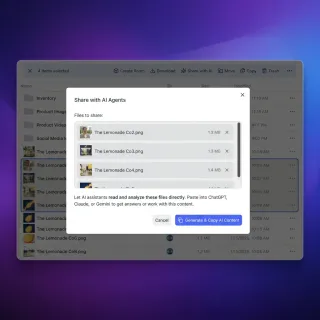
How to Set Up OpenClaw with Google Gemini Models
OpenClaw's Gemini integration connects your agent to Google's full model family, including Gemini 3.1 Pro for chat, Flash for image generation, Veo 3.1 for video, and Lyria 3 for music synthesis. This guide covers both authentication methods, model routing, multimodal capabilities, cache optimization, and how to persist your agent's outputs in a shared workspace.
How to Set Up ClawHub for OpenClaw
ClawHub is the public skill registry for OpenClaw, with over 13,000 community skills available. This guide walks through installing the CLI, searching for skills, installing and updating them, and getting productive with your first agent setup. Covers the full workflow from zero to a working skill stack.
OpenClaw Free Tier: Features, Limits, and Setup
OpenClaw agents connect to persistent Fastio workspaces with scalable cloud storage and usage credits. Review Starter, Business, and Growth plans, trial access, team sharing, and built-in AI search.
How to Get Started with the OpenClaw Python SDK
The OpenClaw Python SDK lets you manage agents, workspaces, and tools from Python code instead of the CLI or chat interface. This guide covers installation, authentication, and building a basic agent with persistent storage. Fastio is used as the storage backend in the examples, but the SDK works with other backends too.
How to Set Up OpenClaw MCP Server
Connect OpenClaw to Fastio's hosted MCP server for consolidated tools covering files, sharing, and AI. Connect directly over HTTP or SSE with your scoped API key. This guide covers prerequisites, setup steps, testing, and troubleshooting. It also explains what MCP is and how OpenClaw connects to MCP servers.
Top ClawHub Skills for Developers
ClawHub is the central registry for OpenClaw skills, a community marketplace where developers discover and share capabilities for AI agents. This guide covers the top ClawHub skills worth installing, including persistent storage, automated deployment, testing, and more.
All guides

7 Practical OpenClaw Use Cases for AI Agent Teams
OpenClaw connects messaging apps, LLMs, and automation skills into a single agent framework that runs on your own hardware. This guide covers seven proven use cases, from daily briefing systems to multi-agent research pipelines, with practical advice on persistent storage, skill selection, and handoff workflows for each.
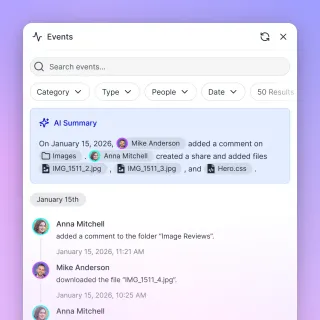
9 Best ClawHub Skills for Data Engineering
Data engineering teams turn to ClawHub for OpenClaw skills that handle ETL monitoring, schema changes, and data validation. These skills let agents run autonomous data pipelines, cutting manual checks and debugging time. This list ranks the best ClawHub skills for data engineering by relevance, installs, and integration ease. Each entry covers key use cases like pipeline monitoring and ETL automation with OpenClaw. Expect practical details on setup and workflows.
Best ClawHub Skills for Copywriters: Top 10 Ranked
The best ClawHub skills for copywriters handle repetitive tasks like web research, competitor analysis, and content storage. These OpenClaw skills run autonomously, using RAG for fact verification and agentic workflows for editing. Copywriters save hours weekly while maintaining quality.

Best ClawHub Skills for Healthcare AI Teams
OpenClaw's medical skills ecosystem has grown fast, with FreedomIntelligence's OpenClaw-Medical-Skills library alone offering 869 curated skills across clinical, genomics, drug discovery, bioinformatics, and medical device categories. This guide covers the most useful ClawHub skills for healthcare AI teams, organized by medical specialty, with compliance caveats that most guides skip entirely.
Best ClawHub Skills for Localization Teams
ClawHub provides essential skills that automate translation workflows and context management for localization teams. Choosing the correct skills helps you maintain brand consistency across regions while reducing manual oversight. This guide covers the top OpenClaw integrations available right now, giving your agents the ability to pull source strings, verify terminology, and manage multilingual assets directly.

Best OpenClaw Alternatives for AI Agent Workflows in 2026
OpenClaw's 353k GitHub stars make it the most popular AI agent framework, but security issues in ClawHub and a growing codebase have pushed developers toward alternatives. This guide compares seven options across deployment model, security posture, and cost so you can pick the right one for your agent workflows. Last reviewed September 2, 2026.

Best OpenClaw Courses and Training Programs in 2026
Class Central now lists over 30 OpenClaw courses, up from nearly zero a year ago. Most roundups list them without evaluating structure, prerequisites, or what you actually build. This guide compares the top seven by format, depth, cost, and who each one suits best, so you can pick the right starting point instead of watching five introductions that all cover the same installation steps.
Best OpenClaw MCP Integrations: Top Skills for Claude Code
OpenClaw MCP integrations are skills that wrap Model Context Protocol servers into installable, zero-config packages for Claude Code, giving agents instant access to external tools and services. Instead of manually editing configuration files, developers can add capabilities like cloud storage, web search, and database access with a single command. This guide ranks the top MCP integrations available as OpenClaw skills.

Best OpenClaw Projects to Build: Beginner to Advanced Ideas for 2026
OpenClaw crossed 250,000 GitHub stars faster than any software project in history, but most developers stall after the initial setup. This guide covers 10 concrete OpenClaw projects organized by difficulty tier, each with estimated build time, required skills, and a clear explanation of what makes it worth building. Projects range from a 30-minute Reddit digest bot to a multi-agent research pipeline that runs overnight.
ClawHub CLI: Complete Command Reference for Skill Management
The ClawHub registry grew from 5,700 skills in February 2026 to over 44,000 by April, but the CLI that manages all of it remains poorly documented outside its own repo. This guide covers every ClawHub CLI command grouped by workflow: authentication, discovery, installation, publishing, package verification, and batch sync for CI pipelines.

Context Engineering in OpenClaw: Design What Your Agent Sees
Chroma's research on context rot found that GPT-4 accuracy drops from 98.1% to 64.1% based purely on how information is structured, not on how much context is available. OpenClaw gives you direct control over this through seven workspace bootstrap files, configurable truncation limits, and a pluggable context engine system that lets you replace the entire prompt assembly pipeline.
Hermes Agent vs OpenClaw: Which Open-Source AI Agent Should You Choose
Nous Research Hermes Agent and OpenClaw are the two dominant open-source AI agent frameworks in 2026. They share the same basic premise, a self-hosted agent that connects to your messaging platforms and automates tasks with LLMs, but they diverge sharply on learning, security, and deployment. This guide breaks down the practical differences so you can pick the one that fits your actual workflow.

How Open Source Maintainers Use OpenClaw for GitHub Automation
Open source maintainers spend a disproportionate share of their time on issue triage, stale ticket cleanup, and PR review queues rather than writing code. OpenClaw's GitHub MCP integration turns those repetitive tasks into automated workflows: label assignment, duplicate detection, CI failure summaries, changelog generation, and cross-repo status reports that run on configurable schedules or in real time via webhooks.
How OpenClaw Builds Its System Prompt and How to Customize It
OpenClaw does not use a single static system prompt. It assembles one from scratch for every agent run, pulling in tool definitions, context files, runtime state, and user configuration. A GitHub issue analyzing 49 requests on a local model found a 10x latency gap between cache hits and misses, all caused by prompt section ordering. This guide walks through the assembly pipeline, the five main configuration knobs, and practical techniques for keeping your prompts cache-friendly.
How OpenClaw Tool Calling Works: Tools, Skills, and Plugins
ClawHub listed over 44,000 community-built skills as of April 2026, yet tool call failures remain the most common debugging challenge in OpenClaw deployments. This guide maps the complete tool calling architecture: nine built-in tool categories, five permission enforcement layers that silently filter what the model can see, and the tools-skills-plugins extension model that most documentation only partially explains.
How to Add Mem0 Persistent Memory to OpenClaw
OpenClaw's built-in memory only auto-loads two days of notes at session start and relies on the LLM to decide what gets saved. The Mem0 plugin moves memory control to the system layer, enforcing capture and recall on every turn without agent discretion. This guide covers installation, configuration, the Triage/Recall/Dream lifecycle, and when Mem0 makes sense versus the default memory system.
How to Automate Airtable with OpenClaw
OpenClaw can read, write, and manage Airtable records through natural language commands, replacing manual Zapier and Make workflows with direct API calls from your AI agent. This guide walks through two integration paths (the ClawHub skill and Composio MCP), covers authentication setup, and shows how to schedule recurring database tasks using OpenClaw's built-in cron system.

How to Automate CI/CD Pipelines with OpenClaw and GitHub Actions
OpenClaw adds an intelligent automation layer on top of GitHub Actions. Instead of writing brittle if-then rules for every failure mode, you get an agent that monitors pipeline runs, classifies failures by type, reviews pull requests for real issues, and coordinates deployments across environments. This guide walks through setting up OpenClaw's CI/CD skills, connecting them to your GitHub repos, and storing pipeline artifacts in persistent workspaces.

How to Automate Database Administration with the Best ClawHub Skills
Database administrators are discovering that the best ClawHub skills for database administrators allow AI agents to safely query, monitor, and tune database schemas. Instead of running routine maintenance manually, you can delegate repetitive workflows to autonomous systems. In this guide, we explore the top ClawHub skills for database management.
How to Automate DevOps Workflows with OpenClaw
73% of organizations still run CI/CD pipelines without any AI involvement, even as AI tools saturate upstream development work. OpenClaw closes that gap with event-driven automation, community DevOps skills, and a durable Task Flow engine that handles multi-step deployments end to end. This guide covers pipeline generation, infrastructure scaffolding, deployment automation, and how to pair OpenClaw with persistent artifact storage on Fastio.

How to Automate Email Workflows with OpenClaw Agents
OpenClaw agents can monitor inboxes, classify messages, extract data from attachments, and route actions through configurable skills. This guide walks through three integration paths (Gmail, AgentMail, Resend), covers scheduling and real-time triggers, and shows where to persist processed outputs so nothing gets lost between sessions.
How to Automate Grafana Dashboards with an OpenClaw Agent
Grafana Lens is an open-source OpenClaw plugin with 18 composable tools that turn natural language into PromQL queries, automated dashboards, and alert rules across your LGTM stack. Instead of switching between tabs and writing queries from memory, an OpenClaw agent handles metric exploration, anomaly detection, and incident reporting in a single conversation.

How to Automate OpenClaw Workflows with Zapier MCP
OpenClaw agents are good at reasoning, but they need a way to act on that reasoning across your existing tools. Zapier MCP bridges that gap by giving OpenClaw scoped access to 8,000+ apps and 30,000+ actions through a single protocol connection. This guide walks through the full setup, from creating your first Zapier MCP server to building multi-step agent workflows with human approval checkpoints.
How to Automate Stripe Payments with an OpenClaw Agent
SaaS companies lose 0.5 to 1% of monthly recurring revenue to failed payments that customers never intended to trigger. This guide covers how to connect an OpenClaw agent to Stripe using a ClawHub skill or Composio MCP, configure restricted API keys, set up monitoring for failed charges, disputes, and subscription changes, and route alerts to Slack, Telegram, or WhatsApp. You also get a workflow for storing receipts and revenue reports in Fastio so the data is searchable and ready for handoff.
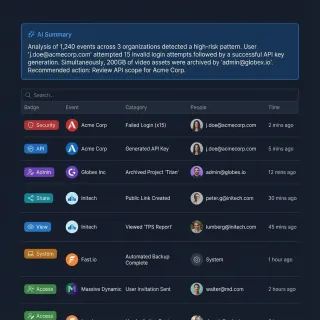
How to Back Up and Restore OpenClaw Agent Data
OpenClaw stores agent configuration, credentials, conversation history, and workspace files in local directories that disappear if your disk fails or your container gets recycled. This guide walks through the built-in backup command, external encryption for production archives, automated scheduling, full restoration, and disaster recovery testing so you can recover a working agent in minutes instead of rebuilding from scratch.
How to Browse and Discover Skills on OpenClaw ClawHub
ClawHub hosts over 13,000 OpenClaw skills, but finding the right one takes more than a keyword search. This guide covers five discovery methods, from CLI commands and vector search to curated community lists, and walks through how to evaluate a skill's security metadata, version history, and community signals before you install it.

How to Build a Customer Support Chatbot with OpenClaw
OpenClaw turns a local AI agent into a customer support chatbot that monitors WhatsApp, Telegram, Slack, and dozens of other messaging channels. This guide walks through configuring OpenClaw's gateway, writing support-focused agent instructions, building a knowledge base for accurate answers, and routing complex issues to human agents. You keep full control of your data because everything runs on your own infrastructure.

How to Build a Data Analysis Agent with OpenClaw for CSV and Spreadsheet Automation
OpenClaw's data-analyst skill turns your AI agent into a working data analyst that can query databases, process CSV and Excel files, generate visualizations, and deliver automated reports from a chat message. This guide walks through skill installation, CSV and spreadsheet processing workflows, scheduled reporting with cron, and how to persist analysis output in shared workspaces where both agents and humans can access the results.

How to Build a Data Pipeline Agent with OpenClaw
Traditional ETL pipelines break when data sources change schemas, rotate auth tokens, or serve content behind JavaScript. OpenClaw agents handle these problems by combining structured orchestration with LLM-driven adaptation. This guide walks through building a data pipeline agent that extracts from APIs, databases, and web pages, transforms the output, loads it into a target system, and tracks state across runs using TaskFlow.
How to Build a Google Calendar Scheduling Agent with OpenClaw
OpenClaw's heartbeat system turns a Google Calendar connection into a scheduling agent that checks your day, creates events from chat, and flags conflicts before they happen. This guide covers Google Cloud setup, OAuth scoping, and the agent workflows that separate a calendar bot from a calendar agent.

How to Build a Human-in-the-Loop Review Workflow in OpenClaw
A human-in-the-loop (HITL) review workflow in OpenClaw lets an agent create an artifact, persist it to durable storage, pause at a checkpoint, and resume only after a human explicitly approves or rejects. This guide covers the pipeline architecture, OpenClaw's hook system, the Lobster workflow engine, channel-agnostic notifications, and how to wire persistent storage underneath the whole thing.
How to Build a Personal AI Assistant with OpenClaw
OpenClaw crossed 350,000 GitHub stars in under five months, making it the most-starred software project on the platform, yet most setup guides stop at installation. This guide goes further: configuring SOUL.md for personality, connecting messaging channels like WhatsApp and Telegram, writing HEARTBEAT.md automations for daily briefings, and wiring Fastio as the persistent storage layer so your assistant's files survive reboots and session resets.

How to Build a Voice Assistant with OpenClaw
OpenClaw treats voice as a first-class I/O channel with support for 14 TTS providers, multiple STT engines, and a voice-call plugin for phone lines. Configuring the full pipeline takes minutes, and the same setup works across Telegram voice messages, Discord voice channels, web browser Talk Mode, and phone calls through Twilio, Telnyx, or Plivo.
How to Build a Web Scraping Agent with OpenClaw
OpenClaw's browsing skill turns your AI agent into a web scraper that can navigate pages, handle JavaScript rendering, and extract structured data without writing brittle CSS selectors. This guide walks through setting up the browsing tools, configuring proxy rotation for anti-bot evasion, building extraction workflows with memory and retry logic, and storing scraped results in a persistent workspace.

How to Build a Website with OpenClaw
OpenClaw turns website building into a conversation. Instead of opening an IDE, you describe pages, features, and design changes through Telegram, WhatsApp, or Discord, and the agent handles scaffolding, coding, and deployment. The approach works from a phone, a laptop, or any device with a messaging app.
How to Build an Image Analysis Agent with OpenClaw Vision Models
OpenClaw separates text and vision processing into independent model pipelines, letting you pair a fast text model with a specialized vision model in the same agent. You'll configure the imageModel setting, select the right vision model for your use case, and connect your agent to persistent storage for analysis results.

How to Build an Incident Response Agent with OpenClaw
IBM's 2025 Cost of a Data Breach report found organizations using AI and security automation saved $1.76M per breach compared to those without, and shortened the breach lifecycle by 108 days. Most on-call teams still rely on manual runbooks or heavyweight SOAR platforms that take months to integrate.

How to Build an OpenClaw Agent for Sentry Error Tracking
Sentry processes over 790 billion events per month for 130,000 organizations, but most teams still triage errors by hand. An OpenClaw agent can watch your Sentry project, classify incoming issues by severity, pull stack traces and breadcrumbs, and route fixes to the right engineer or even open a PR automatically.

How to Build an OpenClaw Dynamics 365 Agent
Most Dynamics 365 automation guides stop at Copilot Studio or Power Automate. This one covers a different path, connecting an OpenClaw agent to Dynamics 365 CRM through Composio's MCP toolkit so the agent can create leads, update opportunities, and manage cases autonomously. The guide walks through setup, CRM data operations, enterprise governance under Microsoft Agent 365, and persistent storage for agent outputs.

How to Build an OpenClaw ERP Automation Agent with Odoo
Automated invoice processing costs $3.24 per invoice compared to $15.97 when done manually, a 79% reduction that compounds across every ERP transaction a business runs. This guide walks through connecting OpenClaw to Odoo ERP using the open-source Odoo Connector skill, configuring 13 business modules for chat-driven automation, and wiring persistent file storage through Fast.io for exports, audit trails, and team handoff.
How to Build an OpenClaw Google Sheets Agent for Automated Reporting
Google Sheets API traffic exceeds 900 million monthly hits, yet most OpenClaw integration guides stop at "read a cell, write a cell." This guide covers the full agent workflow: authenticating via a service account, configuring skills for batch reads and writes, setting validation rules so your agent does not silently corrupt data, scheduling overnight report runs, and persisting output in a shared workspace where teammates can actually find it.

How to Build an OpenClaw Power BI Dashboard Agent
OpenClaw can automate the repetitive parts of Power BI management, from triggering dataset refreshes to generating plain-language narrative summaries and routing reports to the right people. This guide covers how to set up an OpenClaw Power BI agent, connect it through the REST API, configure the five core functions, and store generated reports in persistent workspaces for team handoff.

How to Build an OpenClaw Salesforce Agent for CRM Automation
An OpenClaw Salesforce agent connects your self-hosted AI assistant to Salesforce CRM via MCP, enabling SOQL queries, opportunity management, and automated pipeline reporting through natural language commands. This guide walks through the full setup, from creating a Salesforce Connected App to running your first pipeline query, with persistent file storage for CRM exports and reports.
How to Build an OpenClaw SharePoint Document Agent
The OpenClaw SharePoint skill connects agents to enterprise document libraries through the Microsoft Graph API using certificate-based authentication. It supports text extraction from .docx.xlsx.pptx.pdf.txt, and .md files, scoped to a single SharePoint site via Sites.Selected permissions. This guide walks through Azure app registration, certificate setup, skill installation, document extraction workflows, and how to persist extracted data in shared workspaces.

How to Build an OpenClaw Social Media Automation Agent
OpenClaw crossed 346,000 GitHub stars before its six-month birthday, yet most social media automation still runs through SaaS dashboards that give you zero control over content logic. This guide walks through building a custom posting agent with OpenClaw's cron scheduler and standing orders, from connecting platform APIs through Zernio to setting up human-in-the-loop review before anything goes live.

How to Build Better Cloud Architecture: Best ClawHub Skills
Cloud architects use AI agents to design, provision, and audit distributed systems. The best ClawHub skills give these autonomous agents direct access to cloud APIs, documentation, and storage -- turning manual infrastructure work into code-driven workflows. This guide covers the top OpenClaw integrations so you can evaluate the right tools for your multi-agent architecture.
How to Build Custom Agents in OpenClaw
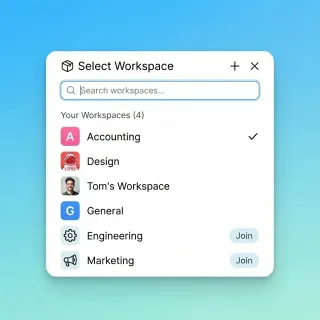
OpenClaw hit 3.2 million monthly active users in April 2026, yet most deployments still run a single default agent handling every task. This guide covers the full multi-agent lifecycle, from creating isolated agents and configuring per-agent skills to binding channels and customizing identities, so you can route the right work to the right agent.

How to Build Custom MCP Servers for OpenClaw
Custom MCP servers let OpenClaw agents use your internal APIs and data. This guide shows you how to scaffold, build, and connect a Model Context Protocol server. You will learn to expose tools, resources, and prompts that give your AI agents safe access to your business's critical systems.

How to Build Multi-Agent Workflows in OpenClaw
OpenClaw multi-agent workflows let multiple agents coordinate on tasks like data processing or report generation. Fastio provides the shared workspaces agents need, with advisory file locks for safe concurrent access and built-in RAG for common knowledge. This guide walks through setup, MCP configuration, coordination patterns, and human handoffs.
How to Build OpenClaw Cloud Workspaces
OpenClaw cloud workspaces give multi-agent teams shared storage with built-in RAG. Agents save files that last, coordinate with file locks, and query the workspace through Ripley. This guide walks developers through setting up workspaces for OpenClaw agents on Fastio.
How to Build RAG Pipelines with OpenClaw
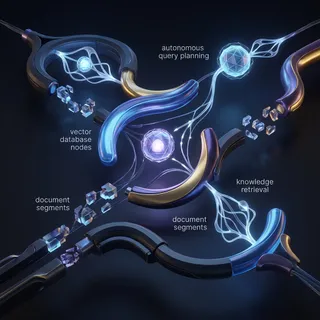
OpenClaw RAG pipelines index documents into embeddings for semantic retrieval. This helps agents be more accurate with your data. Fastio indexes files once Intelligence is enabled for the workspace. The remote MCP server provides tool access. This guide shows setup steps, code examples, multi-agent workflows, and production examples. It covers RAG best practices too.

How to Choose the Best ClawHub Skills for Full Stack Developers
Finding the right automation tools changes how you build web applications. The best ClawHub skills for full stack developers simplify everything from database management to frontend scaffolding. This guide breaks down the most effective OpenClaw developer workflow skills so you can build faster and collaborate better across your technology stack.
How to Configure and Run OpenClaw Subagents
OpenClaw's subagent system lets you spawn isolated background agents that run tasks in parallel and announce results back when they finish. A workflow that takes 45 seconds serially can drop below 20 seconds with properly structured concurrent subagents.
How to Configure Network Proxies in OpenClaw
OpenClaw's network proxy routes outbound HTTP and WebSocket traffic from gateway, node, and agent processes through a managed endpoint. This guide walks through the full proxy security model: YAML configuration, the three loopback modes, a default denylist covering 29+ IP ranges and hostnames, TLS setup for HTTPS proxies, and the validate command that confirms everything works before you go to production.

How to Configure OpenClaw Agent Memory Management Patterns
OpenClaw's memory system uses a layered architecture where short-term conversation context, mid-term Markdown files, and long-term vector-indexed memory work together to give agents persistent recall across sessions. This guide walks through each memory tier, explains dreaming consolidation, covers LanceDB hybrid retrieval setup, and shows how to prevent context loss during compaction.

How to Configure OpenClaw Streaming and Response Chunking
OpenClaw ships two independent streaming layers, block streaming and preview streaming, but the docs drop you into a flat config reference with no map between them. This guide walks through each layer, explains how the EmbeddedBlockChunker splits long responses without breaking markdown, and provides per-channel recipes for Discord, Telegram, WhatsApp, and Slack. You will also learn how to store and version your streaming configs in a shared workspace so your whole team can iterate on them.
How to Configure OpenClaw Thinking Levels for Better Agent Reasoning
OpenClaw ships with eight thinking levels that control how deeply an AI model reasons before responding, but each LLM provider maps these levels to its own API differently. This guide covers all eight levels, the five-layer resolution hierarchy that decides which level applies, provider-specific mappings for Anthropic, DeepSeek, Google, OpenAI, and Ollama, and practical configuration for consistent agent output.
How to Connect OpenClaw to Azure OpenAI
OpenClaw does not support Azure OpenAI natively. GitHub issue

How to Connect OpenClaw to Datadog for AI Agent Monitoring
Datadog's free LLM Observability tier gives you 40,000 spans per month to trace OpenClaw agent behavior, but most teams stop there and miss the other direction: letting agents query Datadog back. This guide covers both sides of the OpenClaw Datadog integration, from instrumenting your agents with telemetry to giving them MCP-based access to your monitoring data, with a shared workspace layer for persisting the reports that come out of each direction.

How to Connect OpenClaw to Linear for AI-Powered Issue Management
OpenClaw connects directly to Linear's GraphQL API, giving your AI agent the ability to triage issues, plan cycles, and generate status reports from natural language commands. This guide walks through both the native plugin and the Composio managed approach, then shows how to pair either setup with Fastio for persistent file storage and human handoff.
How to Connect OpenClaw to LM Studio for Local LLM Agents
OpenClaw's default preload behavior conflicts with LM Studio's JIT model loading, causing models to stay permanently resident on memory-constrained machines. This guide walks through the full connection setup, from installing LM Studio through the OpenClaw onboarding flow, and covers the preload configuration fix that most integration tutorials leave out.

How to Connect OpenClaw to Monday.com for AI Project Management
The OpenClaw Monday.com integration lets AI agents use Monday.com boards as persistent memory and task queues for autonomous project management. This guide covers two integration paths (Monday.com's native MCP server and Composio's managed plugin), the board-as-memory pattern that makes agent activity visible to your whole team, and how to pair Monday.com task tracking with persistent file storage.
How to Connect OpenClaw with Trello for Task Automation
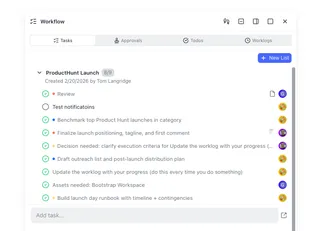
OpenClaw can create Trello cards, move tasks between lists, add comments, and manage boards through natural language. This guide covers three integration paths, from the Composio toolkit to a bundled MCP skill, and explains how to pair the workflow with persistent file storage so nothing gets lost between agent sessions.
How to Connect Tavily Search to Your OpenClaw Agent
Tavily is an AI-native search API that returns structured results instead of raw HTML, and it ships as one of nine API-backed search providers in OpenClaw. This guide walks through both integration paths, the native plugin config and the Composio MCP server, then covers advanced search modes, provider tradeoffs, and how to persist your agent's research output in a shared workspace.
How to Create Branded Shares in OpenClaw
OpenClaw branded shares let agents deliver outputs through branded portals instead of generic links. They combine OpenClaw's skills with Fastio's branded portals for sharing agent outputs. This guide covers setup and creation steps.

How to Deploy OpenClaw on AWS Lambda for Serverless AI Agents
Running OpenClaw on AWS Lambda eliminates the fixed monthly cost of a dedicated server while keeping your AI agent available on demand. This guide walks through three serverless deployment paths on AWS, from Lambda Containers targeting roughly $1/month to Bedrock AgentCore for production multi-user setups, with CDK templates, cost math, and session persistence patterns for each.
How to Deploy OpenClaw on Coolify for Self-Hosted Agent Infrastructure
Coolify gives you a managed deployment experience for OpenClaw without surrendering control to a cloud vendor. This guide walks through the full setup: connecting your server, deploying OpenClaw from a public repo, configuring AI providers and chat integrations, and hardening the deployment for daily use. You will also learn how to add Fastio as a persistent storage layer so your agent's files survive container restarts and stay accessible to your team.
How to Deploy OpenClaw on DigitalOcean App Platform
DigitalOcean gives you three ways to run OpenClaw: a 1-Click marketplace Droplet, the managed App Platform for production scaling, or a manual Docker setup on any Droplet. This guide walks through each option with deployment steps, pricing breakdowns, and a decision matrix so you can pick the right path for your team size and workload.
How to Deploy OpenClaw with Ansible
82% of server configuration errors originate from manual setup, and AI agent deployments are no exception. The official OpenClaw Ansible playbook automates production deployment with security-first defaults, covering UFW firewall rules, Tailscale VPN access, Docker isolation, and systemd hardening. This guide walks through prerequisites, installation, security architecture, configuration, and post-deployment verification.
How to Deploy OpenClaw with Docker: A Production Guide
Deploy OpenClaw with Docker to make sure your AI agents run the same way in every environment, from your laptop to production servers. This guide covers the full setup process, including Docker Compose configuration, managing environment variables securely, and adding Fastio for persistent cloud storage. Containerizing your agent prevents dependency conflicts and builds a scalable base for advanced AI workflows.
How to Download OpenClaw: Every Installation Method Explained
OpenClaw passed 500,000 running instances in early 2026, but choosing the right installation method still trips up newcomers. This guide walks through every option: the one-line installer script, npm global install, Docker containers, the native macOS app, and community-built GUI installers. Each method gets platform-specific steps, system requirements, and a comparison table so you can pick the right path for your setup.

How to Extract and Analyze PDFs with OpenClaw Agents
OpenClaw's built-in PDF tool lets agents extract text and analyze documents through native provider APIs or an automatic text-plus-image fallback. It supports up to 10 PDFs per call, page filtering for targeted extraction, and a 4 million pixel budget for image rendering. This guide covers both execution modes, batch processing workflows, structured extraction patterns, and how to persist extracted data in shared workspaces.
How to Get JSON Structured Output from OpenClaw
LLM responses fail JSON parsing 8 to 15 percent of the time without schema enforcement. OpenClaw solves this with two built-in methods: the llm-task plugin, which forces JSON-only output with optional JSON Schema validation, and code-mode's json() function, which lets you capture structured data alongside text during script execution. This guide walks through both approaches with working examples and configuration details.
How to Get Started with the OpenClaw Python SDK
The OpenClaw Python SDK lets you manage agents, workspaces, and tools from Python code instead of the CLI or chat interface. This guide covers installation, authentication, and building a basic agent with persistent storage. Fastio is used as the storage backend in the examples, but the SDK works with other backends too.
How to Handle Rate Limits and API Throttling in OpenClaw
OpenClaw handles rate limiting at two levels, and most troubleshooting guides only cover one. This guide breaks down both the gateway authentication limiter and provider-level billing backoff, with configuration references, the known backoff bug from GitHub issue #5159, and workarounds that prevent agents from burning through API credits on failed retries.
How to Implement Semantic Search in OpenClaw
OpenClaw semantic search uses vector embeddings for intelligent file retrieval in Fastio workspaces. Combine OpenClaw agents with Fastio Intelligence Mode to auto-index documents and query by meaning, such as \"find contracts mentioning indemnity clauses.\" This how-to guide covers setup, code examples, and tips for developers building agent workflows.
How to Import Google Drive Files to OpenClaw
OpenClaw agents pull files from Google Drive into Fastio workspaces. The import handles bulk folders via OAuth and keeps permissions where possible. Files index for RAG queries when Intelligence Mode is enabled. Set it up with the Fastio ClawHub skill. No local downloads needed.
How to Install and Run OpenClaw in WSL2 on Windows
WSL2 gives Windows users a full Linux kernel for running OpenClaw Gateway without dual-booting, but the official docs are compact and skip common pitfalls like filesystem placement and idle termination. This guide walks through the complete path: installing WSL2 with systemd, setting up OpenClaw, configuring headless auto-start, forwarding ports for LAN access, and connecting persistent storage for agent output.
How to Install OpenClaw on Any Platform
OpenClaw crossed 370,000 GitHub stars and 1.6 million weekly npm downloads by April 2026, yet most third-party install guides cover only one operating system or skip the gateway configuration that makes the agent actually useful. This guide walks through all five official installation methods, from the one-line installer script to source builds and Docker containers, across macOS, Linux, Windows WSL2, and container environments.
How to Install OpenClaw on Linux with Systemd and Auto-Start
OpenClaw's installer gets the Gateway running in under a minute, but on a headless Linux server the process dies the moment you close your SSH session. This guide walks through the full production setup: installing Node 24 and OpenClaw, writing a systemd user service, enabling loginctl lingering for auto-start, tuning OOM kill behavior, and tunneling the dashboard over SSH. By the end, your Gateway survives reboots, logouts, and memory pressure without manual intervention.
How to Integrate Dropbox with OpenClaw Workspaces
Connect your Dropbox storage to OpenClaw agent workspaces. AI agents can then read, analyze, and create files in your existing folders. This guide covers setup, security configuration, and file automation.

How to Integrate MCP Servers with OpenClaw Agents
MCP integration lets OpenClaw agents connect to external tools like file storage servers. Access Fastio's consolidated MCP toolset for uploads, workspaces, AI queries, and shares. This how-to guide walks through setup, authentication options (API key, PKCE), core workflows, and troubleshooting. Includes code examples, agent use cases, and production tips. Fastio offers a 14-day Business Trial at /pricing/.
How to Integrate OpenClaw with HubSpot for CRM Automation
OpenClaw can connect to HubSpot's CRM through two paths: Composio's managed MCP server with automatic OAuth, or a HubSpot Private App token with scoped API permissions. Once connected, your agent reads contacts, updates deals, monitors pipelines, and triggers follow-up workflows without you touching the CRM manually. This guide covers both setup methods, the CRM operations available, practical automation recipes, and how to store agent output in a persistent workspace humans can access.
How to Integrate OpenClaw with Jira for Automated Project Management
OpenClaw connects to Jira's REST API v3 for natural language ticket creation, sprint tracking, and backlog triage. This guide walks through three integration paths, from managed MCP plugins to self-hosted pipelines, and shows how to pair the setup with persistent file storage for the artifacts your agents produce along the way.

How to Integrate OpenClaw with Shopify for Ecommerce Automation
Researchers found 341 malicious skills in OpenClaw's ClawHub marketplace within weeks of its popularity surge, yet Shopify merchants keep adopting the framework because the automation ROI is hard to ignore. This guide walks through the full integration, from creating a Shopify custom app to running your first automated order workflow, with specific attention to the security decisions most tutorials skip.

How to Integrate OpenClaw with Supabase for AI Backend Storage
Roughly 15% of new Supabase projects now enable pgvector, reflecting how PostgreSQL is becoming the default memory layer for AI agent backends. This guide compares three ways to connect OpenClaw with Supabase for persistent storage, vector search, and backend management, and covers the setup and tradeoffs of each approach.
How to Manage OpenClaw Agents with Studio's Web Dashboard
OpenClaw Studio is a community-built Next.js dashboard that connects to your OpenClaw Gateway over WebSocket, adding fleet management, approval workflows, cron scheduling, and real-time streaming chat to the agent management experience. With 2,000+ GitHub stars and three supported deployment architectures, it fills the gap between the built-in Control UI's localhost admin surface and what teams running production agent fleets actually need.

How to Manage the Context Window in OpenClaw
Conversation history accounts for 40 to 50 percent of total token consumption in a typical OpenClaw session, and that cost compounds with every turn. This guide covers exactly what fills the context window, how to monitor usage with /status and /context commands, how to tune bootstrapMaxChars and toolResultMaxChars, and when to trigger compaction so your agent stays effective across long sessions.
How to Migrate from CrewAI to OpenClaw
CrewAI organizes agents into crews that execute tasks through sequential or hierarchical processes, all defined in Python. OpenClaw takes a different approach: you configure agents with Markdown files and run them through a local gateway with built-in messaging channels. This guide maps every major CrewAI concept to its OpenClaw equivalent, walks through the migration step by step, and covers the storage and handoff layer your new agents will need.

How to Migrate from LangChain to OpenClaw
LangChain gives you building blocks: chains, tools, memory modules, and callbacks that you wire together in Python. OpenClaw gives you a running agent: a local gateway with built-in memory, a skill registry, and messaging channel support out of the box. Migrating between the two means rethinking how you organize agent logic, not just rewriting code. This guide maps every major LangChain concept to its OpenClaw equivalent, walks through the migration step
How to Migrate from RPA to OpenClaw AI Agents
Up to 50% of RPA projects fail to deliver expected ROI, largely because maintenance eats 30-50% of the initial investment every year. This guide walks through replacing traditional RPA bots with OpenClaw's record-and-compile model, where you describe a task in plain language, the AI records browser actions, and it compiles everything into a standalone Playwright script that runs without token costs.
How to Read the OpenClaw Changelog and Track Every Update
OpenClaw tagged at least six releases in April 2026 alone, and the pace has not slowed into June. Each version carries plugin API changes, provider updates, and storage schema migrations that affect running agents. This guide organizes the 2026 changelog by version, flags every confirmed breaking change, and walks through the upgrade process so you can stay current without getting burned.
How to Run OpenClaw in VS Code: Three Extension Approaches Compared
The official OpenClaw extension has nearly 5,000 VS Code installs, but it only covers one of three ways to connect OpenClaw to your editor. This guide walks through all three approaches: the official status bar extension for quick model management, the Node bridge for exposing 40+ IDE commands to AI assistants, and the ACP Client for routing prompts to OpenClaw alongside other coding agents. Each method solves a different problem, and choosing wrong means rebuilding your setup later.
How to Run OpenClaw Parallel Agents Without Wasting Tokens
Multi-agent coordination delivers up to 81% improvement on parallelizable tasks, but it can degrade performance by 70% when the work is actually sequential. OpenClaw's subagent system gives you the concurrency controls to get the speedup without the waste: maxConcurrent caps global lanes, maxChildrenPerAgent limits per-session fan-out, and isolated vs fork context modes determine how much state each worker inherits.

How to Secure OpenClaw Against Prompt Injection
Snyk's ToxicSkills study found prompt injection in 36% of ClawHub skills, confirming that external content is the primary attack surface for OpenClaw deployments. This guide walks through the five defense layers documented in OpenClaw's official security architecture and shows how to configure each one with real settings.

How to Secure OpenClaw for Enterprise Environments
Securing OpenClaw takes more than a firewall. Agents in production bring risks like prompt injection and supply chain attacks. This guide explains how to harden OpenClaw, set strict access controls, and meet security standards. Learn to lock down networks, audit activity, and prevent data leaks.
How to Set Up a Local Development Workflow for OpenClaw Agents
A solid local development environment helps you build and debug OpenClaw agents before deployment. This guide covers the full setup, from Docker configuration to installing skills via ClawHub, and shows you how to mock external APIs for safe testing.
How to Set Up an OpenClaw SSH Tunnel for Remote Gateway Access
OpenClaw runs over 500,000 gateway instances across 82 countries, and a large share of those gateways sit on remote servers that operators need to reach from a laptop or desktop. An SSH tunnel forwards the gateway's WebSocket port from that remote machine to localhost, so OpenClaw.app connects as if the gateway were running locally.
How to Set Up an RAG Knowledge Base in OpenClaw
Connect your agents to your proprietary data with automated indexing and semantic retrieval. Enable Intelligence Mode on a Fastio workspace to let agents run RAG queries without managing external vector databases or complex ETL pipelines.

How to Set Up and Use the OpenClaw Browser Relay Extension
The OpenClaw Browser Relay is a lightweight Chrome extension that lets your AI agent interact with browser tabs through a local WebSocket connection using the Chrome DevTools Protocol. This guide covers installation from the Chrome Web Store, connecting the relay to your OpenClaw instance, choosing the right browser control mode, and persisting automation output in shared workspaces.
How to Set Up API Keys in OpenClaw
OpenClaw resolves API keys through a four-level environment variable priority chain, checking session overrides first and falling back through multi-key lists, standard keys, and numbered variants. Rate-limit errors trigger automatic rotation to the next available key without any retry logic in your agent code. The setup covers Anthropic, OpenAI, Google, xAI, and local models through Ollama.
How to Set Up ClawHub for OpenClaw
ClawHub is the public skill registry for OpenClaw, with over 13,000 community skills available. This guide walks through installing the CLI, searching for skills, installing and updating them, and getting productive with your first agent setup. Covers the full workflow from zero to a working skill stack.

How to Set Up File Storage in OpenClaw Workspaces
OpenClaw agents need files that stick around between sessions in shared workspaces. Developers set up persistent storage on Fastio using the remote MCP server for file operations and RAG. This guide walks through remote MCP configuration, workspace setup, file handling, version history, and AI queries. Test workflows with the 14-day Business Trial.
How to Set Up OpenAI Codex as an OpenClaw Provider
OpenClaw 2026.4.10 shipped Codex as a bundled provider, and 2026.5.2 added the /goal command for autonomous multi-step coding tasks. This guide walks through OAuth authentication, runtime configuration, the Codex use plugin, and how to persist agent-generated code in a shared workspace so teammates can review and deploy it.
How to Set Up OpenClaw ACP and Bridge Your IDE to AI Agents
OpenClaw's Agent Client Protocol (ACP) lets you spawn and control external coding tools like Claude Code, Cursor, and GitHub Copilot directly from an OpenClaw chat thread. This guide covers the full setup process, explains the two binding models, compares supported uses, and addresses the security boundary that most guides skip.
How to Set Up OpenClaw Agent Workspaces
OpenClaw agent workspaces give OpenClaw agents persistent file storage and MCP tools. Fastio runs the backend with generous storage, RAG for file searches, and collaboration options. This guide covers the setup steps and best practices for file management.
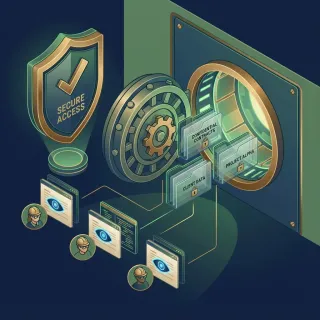
How to Set Up OpenClaw Data Room for Multi-Agent Teams
OpenClaw data rooms offer storage that lasts for ClawHub agent teams. They work as virtual data rooms (VDRs) so multiple agents can share files safely. Locks and permissions prevent conflicts. Fastio workspaces have MCP tools and built-in RAG. This guide explains setup, collaboration, and best practices for faster agent workflows.
How to Set Up OpenClaw for Multiple Users on a Team
OpenClaw assumes a single trusted operator per Gateway, but 65% of its user base sits in enterprise environments where teams need shared access. This guide covers how to use OpenClaw's multi-agent architecture to give each team member their own isolated agent, route messages through bindings, lock down credentials, and connect everything to a shared workspace for output handoff.
How to Set Up OpenClaw Git Integration
OpenClaw Git integration brings GitHub repositories into persistent Fastio agent workspaces. Agents clone repos on their local setup and upload code to cloud storage for edits across sessions. Live editing, multiple-agent collaboration, and syncing without local storage limits. Plan storage measured in terabytes, plus a consolidated MCP toolset for workspace file operations.
How to Set Up OpenClaw Google Workspace Integration for Gmail, Drive, Calendar and Sheets
OpenClaw's Google Workspace plugin connects your AI agent to six Google services through one OAuth authorization. This guide walks through installing the plugin, configuring OAuth credentials, enabling individual services, and building practical automations that span Gmail, Drive, Calendar, Contacts, Tasks, and Sheets.
How to Set Up OpenClaw MCP Server
Connect OpenClaw to Fastio's hosted MCP server for consolidated tools covering files, sharing, and AI. Connect directly over HTTP or SSE with your scoped API key. This guide covers prerequisites, setup steps, testing, and troubleshooting. It also explains what MCP is and how OpenClaw connects to MCP servers.
How to Set Up OpenClaw Multi Agent Workspaces
OpenClaw agents share files, context, and tasks in Fastio multi-agent workspaces. Access consolidated MCP tools for file management, advisory locks for concurrency, and handoffs for human review. Storage and seats come with your plan, while included credits cover AI work.
How to Set Up OpenClaw Multi-Agent Workspaces
When multiple OpenClaw agents need to share files and state, you need shared storage, not local disks on each container. This guide explains the options, then walks through setting up a shared workspace with Fastio as the storage layer.
How to Set Up OpenClaw OAuth and API Key Authentication
GitGuardian's 2025 report counted 1.2 million AI-service secrets exposed on GitHub, up 81% year over year. OpenClaw addresses this with three authentication paths for Anthropic and other model providers: environment-variable API keys with automatic rotation, OAuth 2.0 with PKCE, and Claude CLI credential reuse. This guide walks through each method, the key rotation priority order, per-agent credential pinning, and the verification commands that confirm everything works.

How to Set Up OpenClaw RAG Storage
Guide to openclaw rag storage: Use Fastio workspaces to index documents for OpenClaw agents. Enable Intelligence Mode for automatic indexing, semantic search, and chat. No external vector DB needed. Connect via the remote MCP server.
How to Set Up OpenClaw Sandbox: Docker, SSH, and OpenShell Isolation
88% of organizations reported confirmed or suspected AI agent security incidents in the past year, and unsandboxed code execution is one of the top attack vectors. OpenClaw's built-in sandboxing isolates tool execution in Docker containers, SSH remotes, or managed OpenShell environments, each with configurable scope and workspace access. This guide walks through practical setup for all three backends and explains when to choose each one.
How to Set Up OpenClaw Twilio Integration for Voice and SMS
Production voice agent deployments grew 340% year-over-year across 500+ organizations in 2026, yet most Twilio integration guides still assume you are writing a custom Node.js server from scratch. OpenClaw's voice-call plugin handles the WebSocket plumbing, transcription routing, and call state so you can ship a working voice agent in an afternoon. This guide walks through provider credentials, automation hooks configuration, inbound call policies, SMS setup, and testing with real phone numbers.
How to Set Up OpenClaw WhatsApp Integration
OpenClaw WhatsApp integration lets AI agents reply on WhatsApp while handling files through MCP skills. OpenClaw (Clawdbot/Moltbot) runs locally, connects to WhatsApp, and uses ClawHub for tools like Fastio storage. WhatsApp has over 2 billion monthly active users. Good option for business use.
How to Set Up OpenClaw with AWS Bedrock
Amazon Bedrock handles model inference, IAM authentication, and automatic model discovery for OpenClaw, removing the need to manage API keys or provision GPU instances. This guide walks through two deployment paths, a one-click Lightsail blueprint and an EC2 stack via CloudFormation, then covers all three authentication methods, automatic model discovery, Guardrails content filtering, service tiers, and embeddings configuration.
How to Set Up OpenClaw with Google Gemini Models
OpenClaw's Gemini integration connects your agent to Google's full model family, including Gemini 3.1 Pro for chat, Flash for image generation, Veo 3.1 for video, and Lyria 3 for music synthesis. This guide covers both authentication methods, model routing, multimodal capabilities, cache optimization, and how to persist your agent's outputs in a shared workspace.
How to Set Up OpenClaw with Groq for Fast LPU Inference
Groq's LPU hardware delivers the fast inference available for OpenClaw agents, with Llama 3.3 70B running at 275+ tokens per second on standard endpoints and over 1,600 tokens per second with speculative decoding. This guide covers authentication setup, model selection, free tier constraints, and how to build agent workflows that take advantage of near-instant responses.
How to Set Up OpenClaw with Ollama for Local AI Agents
OpenClaw's Ollama integration lets you run a fully autonomous AI agent powered by local models, with a single command handling installation, security setup, model selection, and gateway launch. This guide walks through the end-to-end setup, helps you pick the right model for your hardware, and shows how to persist agent outputs in shared workspaces.
How to Set Up OpenClaw with OpenAI GPT Models
OpenClaw supports two authentication paths for OpenAI: direct API key billing and Codex subscription OAuth. This guide covers both setup methods, model routing for GPT-5.5 and the full OpenAI model catalog, context window tuning, server-side compaction, Azure OpenAI configuration, and transport optimization for production agent workflows.
How to Set Up OpenClaw with OpenRouter Multi-Provider Routing
OpenRouter gives OpenClaw agents access to hundreds of AI models through a single API key. Instead of locking every request to one expensive model, you can route complex reasoning to frontier models and simple tasks to lightweight alternatives, cutting API costs by 60% or more. This guide covers API key setup, auto routing, explicit model selection, fallback chains, and how to persist your agent's output in a shared workspace.
How to Set Up Persistent Storage in OpenClaw
OpenClaw agents forget their state between sessions. Persistent storage lets them save memory, files, and data to Fastio cloud workspaces. Connect via remote MCP to access consolidated tools with no local setup required. Start in minutes with version history for multi-agent coordination. This guide covers setup through advanced usage.
How to Set Up Shared Workspaces in OpenClaw
OpenClaw workspace setup provides agents with persistent, shared storage for collaborative projects. Connect to the remote Fastio MCP server, authenticate, and agents can create workspaces with semantic search and handoff support. This guide covers prerequisites, configuration, best practices, and troubleshooting for multi-agent teams. You can evaluate the whole flow on a 14-day trial.
How to Set Up Web Search in OpenClaw
OpenClaw's web_search tool supports 13 different search providers, from API-backed services like Brave and Tavily to free alternatives like DuckDuckGo and SearXNG. Auto-detection checks for API keys in a fixed priority order and defaults to Parallel Search (Free) when none are found. Choosing the right provider depends on your agent's workload, your budget, and whether you need structured snippets, full-page content, or AI-synthesized answers.

How to Set Up Webhook Notifications in OpenClaw
OpenClaw webhook notifications help agents handle Fastio workspace events right away. By connecting an event listener to Fastio's WebSocket events feed or polling the activity feed, you can trigger HTTP webhooks to your agent on file uploads, edits, access, and agent handoffs. This guide walks you through setup, from connection to testing.
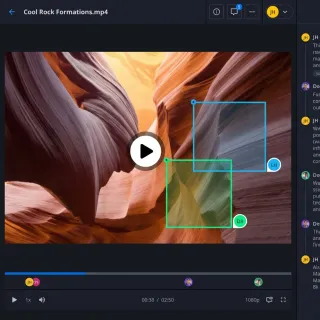
How to Stream Video in OpenClaw Workspaces
OpenClaw agents stream videos in Fastio workspaces with HLS adaptive streaming. Large source files upload resumably. Videos play without buffering. Share branded links for human review. This guide covers setup, steps, limits, and workflows for OpenClaw projects.

How to Sync Confluence Knowledge Bases with an OpenClaw Agent
Knowledge workers spend roughly 30% of their workday searching for information, according to IDC research. Much of that time disappears inside Confluence, where keyword-based search forces you to guess the exact phrasing someone used months ago. An OpenClaw agent connected to Confluence via Composio MCP replaces that friction with natural language queries, automatic page creation, and retrieval-augmented generation against your team's existing documentation.
How to Track and Manage Token Usage in OpenClaw
Most OpenClaw users discover that the bulk of their token spend comes from context accumulation and background processes, not the prompts they actually type. OpenClaw ships with built-in monitoring commands and tunable configuration limits that can cut costs by 50 to 80% without changing how you work. This guide walks through the full monitoring-to-optimization workflow with concrete configuration values.

How to Transfer Ownership in OpenClaw Workspaces
Ownership transfer in OpenClaw workspaces lets AI agents create Fastio organizations, build file structures, and hand them to human users. Agents organize assets, enable AI features, and generate transfer tokens that humans claim via a simple link. The process supports agent-to-human handoffs, with agents retaining admin access for ongoing support.
How to Update OpenClaw: Commands, Channels, and Troubleshooting
OpenClaw shipped four builds in 48 hours during the week of May 18, 2026, from stable 2026.5.18 to two betas and an alpha on the 2026.5.19 line. At that release cadence, running the update command without understanding channels, flags, and failure modes risks unexpected version jumps. This guide covers the full update workflow, including status checks, channel switching, dry-run previews, and fixes for the problems that trip up most operators.

How to Use OpenClaw File Sharing for Agentic Teams
OpenClaw file sharing lets agentic teams access files securely in Fastio workspaces via the remote MCP server. Agents handle uploads, advisory file locks, versioning, and searches independently while audit logs track changes.
How to Use OpenClaw File Versioning
OpenClaw file versioning tracks changes to files in Fastio workspaces. It creates automatic snapshots on edits, shows diffs between versions, and supports rollbacks for multi-agent collaboration. This git-like system helps avoid lost work in agent workflows. Agents access versioning through the remote Fastio MCP server with a consolidated MCP toolset. Developers use it to keep file states stable during tasks like code generation or data processing.

How to Use OpenClaw for Education and Teaching
OECD research shows teachers spend roughly half their working hours on non-teaching activities, from grading to parent correspondence to compliance paperwork. OpenClaw agents can take over the most repetitive parts of that workload: lesson planning, differentiated materials, parent emails, and first-pass grading feedback. Teachers keep full decision-making authority over grades and student outcomes.

How to Use OpenClaw for Finance Automation and Reporting
Finance teams spend roughly 70% of their time preparing reports and only 30% analyzing them. OpenClaw, an open-source AI agent framework, automates the preparation work: reconciliation, expense compilation, cash flow summaries, and variance reporting on your own infrastructure. This guide covers seven automation workflows, accounting platform integration, security considerations, and how to store and deliver financial outputs through shared workspaces.

How to Use OpenClaw for Healthcare Workflows Safely
75% of US health systems have deployed at least one AI solution, but fewer than 30% run autonomous agents in any clinical workflow. OpenClaw's 869 medical skills make it a strong candidate for research and non-PHI automation, yet HIPAA gaps mean you need clear boundaries between what agents can touch and what stays off limits. This guide separates the viable healthcare use cases from the ones that create compliance risk.

How to Use OpenClaw for Real Estate Automation
The average real estate agent takes over 15 hours to respond to a new lead inquiry, yet 78% of buyers work with the first agent who responds. OpenClaw, an open-source AI agent framework, closes that gap by automating lead follow-up, listing content, CRM updates, and transaction coordination on your own infrastructure. This guide walks through five core workflows, CRM integration, security considerations, and how to deliver client documents through shared workspaces.

How to Use OpenClaw for Sales Automation and CRM Workflows
Sales reps spend roughly 70% of their work week on tasks that aren't selling. OpenClaw, the open-source AI agent framework, can automate prospecting, outreach, CRM updates, and follow-up sequences for $20-50 per month, compared to $500+ for commercial AI SDR platforms. This guide covers the full sales funnel, from lead enrichment through close, plus how to store and share the sales assets your agent produces.

How to Use OpenClaw Multi-Agent Locks
OpenClaw multi-agent workflows prevent race conditions in shared AI workspaces. Fastio provides advisory file locks, automatic version history, and audit logs so agents coordinate writes safely.
How to Use OpenClaw with Playwright for Browser Automation
OpenClaw's Playwright integration turns AI agents into browser operators that can navigate pages, fill forms, extract data, and capture screenshots through a token-efficient CLI. A 2026 benchmark measured Playwright CLI at roughly 27,000 tokens per 10-step browser task, about 4x less than MCP-based alternatives. This guide covers installation, the full command set, and practical recipes for scraping, testing, and storing automation results.

How to Use OpenClaw with tmux for Background Agents and Session Management
AI coding agents terminate when their controlling terminal closes, taking in-flight work with them. OpenClaw has two dedicated tmux skills that decouple agent processes from your terminal, letting you spawn background coders, monitor their progress from anywhere, and run parallel workflows that persist through disconnects and reboots.
How to Use OpenClaw's Browser Tool for Web Automation
OpenClaw's browser tool gives AI agents direct control over Chromium browsers through three profile types, each with different security trade-offs. This guide covers managed and remote profiles, headless configuration, cloud browser integrations, CLI commands, and the SSRF protection that keeps automation isolated by default.
How to Use the OpenClaw Mobile App on iOS and Android
OpenClaw's iOS and Android apps turn your phone into a companion node for your self-hosted AI assistant. They connect to your gateway over WebSocket and expose phone hardware like camera, microphone, GPS, and screen capture to your agents. This guide covers what each platform offers, how to pair your phone, and where to store the files your mobile sessions generate.
MCP Skills: How Agent Skills Extend the Model Context Protocol in OpenClaw
Six major coding tools now implement the SKILL.md format because giving an agent access to MCP tools is not the same as teaching it to use them well. MCP skills encode that procedural knowledge. OpenClaw builds on the standard with a six-source loading hierarchy, dependency gating, and ClawHub for community skill sharing.

Moltbot vs OpenClaw: What Changed and How to Migrate
OpenClaw went from Clawdbot to Moltbot to OpenClaw in three days in January 2026, leaving thousands of users unsure whether their existing setups still work. The core agent platform stayed the same through each rebrand, but config paths, package names, and several security features changed. This guide covers the full timeline, technical differences, and a step-by-step migration path.

OpenClaw A2A Protocol: Agent-to-Agent Communication for Multi-Agent Workflows
The A2A protocol hit 150 supporting organizations in its first year, but native OpenClaw support was closed as "not planned" in February 2026. Community plugins already bridge the gap. This guide covers how A2A works, what the OpenClaw a2a-gateway plugin actually does, and how to handle file persistence when agents start delegating work across servers.

OpenClaw Agent Templates and Starter Kit: A Practical Walkthrough
OpenClaw agent templates are pre-configured workspace files that define an agent's personality, operational rules, and memory structure. Instead of writing SOUL.md and AGENTS.md from scratch, you can start from community-maintained templates across 24 categories and customize them for your use case. This guide walks through each core workspace file, the major template repositories, and practical patterns for building production agents.
OpenClaw API Guide: Gateway Endpoints, Auth, and Integration
The OpenClaw Gateway exposes an OpenResponses-compatible HTTP API that gives you programmatic control over agents, sessions, and scheduled tasks. This guide covers the core endpoints, walks through three authentication strategies, and shows how to stream responses and handle errors.
OpenClaw Architecture Explained: Gateway, Plugins, and Skills
OpenClaw runs a single TypeScript Gateway process that owns every messaging connection, routes sessions, dispatches tools, and loads skills on demand. This guide walks through each architectural layer, from the WebSocket protocol and channel adapters to the plugin capability system and ClawHub skill registry, then explains where local file storage falls short and how to add cloud persistence.
OpenClaw Automation Recipes: Ready-to-Use Workflow Templates
Users who configure two or more OpenClaw workflows in their first week retain at 78%, nearly double the 41% rate for single-workflow users. The difference comes down to reusable patterns: once you understand how TaskFlow connects triggers, steps, and approval gates, each new recipe takes minutes instead of hours.
OpenClaw Best Practices for Setup, Security, and Agent Management
Security researchers found over 42,000 OpenClaw Gateway instances exposed on the public internet in early 2026, most running without authentication. This guide covers 12 practices for secure Gateway setup, inbound access control, tool restrictions, multi-agent isolation, and ongoing monitoring. Each one comes from the official OpenClaw documentation and can be applied to any deployment in an afternoon.

OpenClaw Certification Programs: Where to Get Certified in 2026
OpenClaw has no official certification program. Every credential available in 2026 comes from third-party platforms, ranging from free 10-day GitHub courses with community badges to $1,999 live cohorts with LinkedIn-shareable certificates. This guide breaks down the differences between professional certifications, structured courses, and free community programs so you can pick the one that matches your career goals and budget.
OpenClaw Cheat Sheet: Quick Reference for Commands and Config
OpenClaw ships over 30 CLI commands, a separate ClawHub package manager with its own 20-plus command set, and a JSON config file with dozens of keys spread across gateway, channel, model, and sandbox sections. This cheat sheet consolidates the commands and config patterns developers reach for daily into one scannable page, so you stop jumping between four different doc sites.
OpenClaw Coding Agent Tutorial: Automate Bug Fixes and PRs
OpenClaw's coding-agent skill delegates development tasks to background AI processes that fix bugs, review PRs, and refactor code without blocking your main agent session. This tutorial walks through enabling the skill, choosing a backend, spawning your first coding session, monitoring it with process commands, and reviewing the output PR safely.
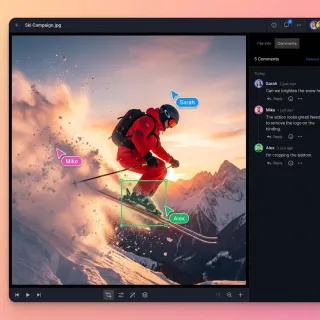
OpenClaw Community Guide: Discord, GitHub, Reddit, and Developer Resources
OpenClaw's 380,000+ GitHub stars make it the most-starred project on the platform, but that popularity has scattered community discussion across Discord, GitHub, Reddit, and ClawHub. This guide maps each channel to its purpose so you ask questions, report bugs, share skills, and contribute code in the right place.

OpenClaw Demo: Try OpenClaw in 5 Minutes
OpenClaw averages 1.6 million weekly npm downloads, but most setup guides assume you have 15 minutes to spare. This walkthrough covers the five commands that take you from zero to a working AI assistant, with your first reply arriving in under five minutes. You will install, onboard, send a test message, try a ClawHub skill, and connect a messaging channel.
OpenClaw Desktop App: macOS Menu Bar Companion Guide
Only 23% of developers regularly use AI agents, according to the 2025 Stack Overflow survey, and most of those interact through a terminal. The OpenClaw macOS app changes that dynamic by putting agent controls in the menu bar, where a single click opens a panel for messaging, status checks, and quick actions without leaving your current workflow.
OpenClaw Documentation: Complete Guide to Every Docs Section
OpenClaw's official docs span over 400 pages across more than 30 categories. Most guides jump straight to installation and leave you to find everything else on your own. This guide maps every major docs section by workflow stage, from first install to plugin development, so you can go directly to the page you need.
OpenClaw Examples: Practical Configurations, Skills, and Automation Patterns
OpenClaw's ClawHub registry hosts over 44,000 skills, but finding complete, production-ready configurations still means piecing together fragments from scattered sources. This guide organizes working examples from the official OpenClaw documentation into five categories: skill creation, agent routing, cron automation, memory setup, and persistent file storage with Fast.io. Every config block is sourced from docs.openclaw.ai and ready to adapt.

OpenClaw for Business: Use Cases, Costs, and Deployment That Actually Work
Self-hosted OpenClaw costs 3x to 5x more than the VPS sticker price once you add LLM API bills and maintenance labor, yet most organizations still reach positive ROI within three to six months of their first production deployment. This guide covers the five business workflows where OpenClaw delivers measurable returns, breaks down real hosting costs, and explains how to bridge the gap between an agent that runs on your laptop and one your team can trust in production.

OpenClaw for Startups: Automate Operations with AI Agents
OpenClaw gives startup teams an AI agent runtime that automates lead qualification, customer support, content creation, and back-office tasks for $10-80 per month in API costs. This guide covers which workflows to automate first, how to calculate ROI against hiring, and how to set up persistent storage so agent output survives between sessions.
OpenClaw Free Tier: Features, Limits, and Setup
OpenClaw agents connect to persistent Fastio workspaces with scalable cloud storage and usage credits. Review Starter, Business, and Growth plans, trial access, team sharing, and built-in AI search.
OpenClaw Hooks: Automate Your Agent Gateway with Event-Driven Scripts
OpenClaw hooks are event-driven TypeScript scripts that run automatically when Gateway events fire, from new session commands to message receipt and context compaction. The system exposes 20+ event types across four categories, ships with five bundled hooks for session memory, command logging, and bootstrap injection, and resolves custom handlers through a four-level discovery hierarchy.

OpenClaw Hosting: Best Options for Self-Hosted and Managed Deployment
OpenClaw runs on your own infrastructure, which means you need to pick a server. Self-hosted VPS plans start around $4/month, while managed services handle updates and monitoring for $17 to $130/month. This guide compares providers, walks through the hardware requirements, and covers the cost traps that catch new deployments off guard.
OpenClaw Integration Guide: Fastio MCP Tools
This OpenClaw integration guide shows how to connect OpenClaw to Fastio workspaces via the remote MCP server. You get Fastio's consolidated MCP toolset for file management, AI document search, branded shares, and ownership handoffs in agent workflows. Follow this guide to set up OpenClaw with Fastio MCP tools and persistent storage. See [/storage-for-agents/](/storage-for-agents/) for details.
OpenClaw JetBrains Plugin: Setup Guide for IntelliJ, PyCharm, WebStorm, and GoLand
Only 22% of developers use AI coding agents daily, yet 66% of companies plan to adopt them this year. JetBrains IDE users are underserved by existing setup guides, which overwhelmingly target VS Code. This walkthrough covers installing the free OpenClaw plugin in IntelliJ IDEA, PyCharm, WebStorm, and GoLand, configuring the ACP bridge for local and remote gateways, and diagnosing the most common setup failures.
OpenClaw Latest Version: Release Notes and Changelog
OpenClaw averages a release every two days across three channels. The latest stable build is 2026.5.18, released May 18, 2026, with a typed plugin system, Android Talk Mode, and faster Gateway restarts. Earlier May releases added file transfer tools, streaming unification, and over 50 bug fixes.
OpenClaw Memory System: Setup, Configuration, and Best Practices
Context compaction silently rewrites OpenClaw conversations into lossy summaries, and anything not written to a file disappears. OpenClaw's three-tier memory system (MEMORY.md for durable facts, daily notes for session context, and an optional dream diary for automated consolidation) solves this by giving agents persistent recall across sessions. This guide walks through each tier, backend selection, search configuration, and the flush settings that prevent context loss before it happens.
OpenClaw Neovim Plugin: Setup, Lualine Integration, and Terminal Workflow Guide
openclaw.nvim wraps the OpenClaw CLI with gateway control, async status polling, and a Lualine statusline component, all inside Neovim. With over 145,000 stars on the main OpenClaw repo and no built-in editor plugin, this community project fills a gap for terminal-native developers. The guide covers installation, Lua configuration for native and WSL setups, and a tmux workflow for running the agent alongside the editor.
OpenClaw Open Source: Licensing, Self-Hosting, and Contributing
OpenClaw surpassed React to become GitHub's most-starred software project in early 2026, reaching 374,000+ stars under an MIT license. This guide covers what that license permits for commercial use, what self-hosting actually costs compared to managed alternatives, and how to navigate the contribution workflow from first issue to merged pull request.
OpenClaw Plugins: How to Find, Install, and Build Extensions
OpenClaw plugins extend the platform with channels, model providers, tools, skills, speech engines, and other runtime capabilities. This guide covers the two plugin formats, five installation sources, the manifest and configuration system, and how to build your own extensions from scratch.

OpenClaw Pricing: What It Actually Costs to Run in 2026
OpenClaw is MIT-licensed and costs nothing to download. The real bill comes from two things: where you host it and which LLM you connect. This guide breaks down actual monthly costs across four hosting providers, six LLM pricing tiers, and four usage scenarios, so you can budget before you deploy.

OpenClaw Production Checklist
Moving OpenClaw from a local experiment to a reliable production service requires more than just `npm start`. This guide provides a battle-tested checklist for securing, scaling, and maintaining autonomous agents in the wild, ensuring your AI workforce is reliable, secure, and ready for real-world traffic.

OpenClaw Review 2026: Honest Assessment for AI Agent Builders
OpenClaw is the most-starred project in GitHub history, but star count alone does not make a tool production-ready. This review covers what OpenClaw actually delivers for AI agent builders: remarkable extensibility through 5,700+ community skills, genuine privacy through local execution, and serious security concerns including CVE-2026-25253 and hundreds of malicious ClawHub packages. If you are evaluating OpenClaw for agent workflows, this is the balanced assessment most reviews skip.

OpenClaw vs Aider: Choosing Between an AI Agent Platform and a Terminal Pair Programmer
OpenClaw and Aider both run in your terminal, but they solve different problems. Aider is a pair programmer with deep git integration, automatic commits, and repository-aware context mapping. OpenClaw is a general-purpose AI agent with thousands of installable skills, multi-channel messaging, and persistent memory. This guide breaks down what each tool does well, where they overlap, and how to decide which belongs in your workflow.
OpenClaw vs ChatGPT: Choosing Between Self-Hosted and Cloud AI
OpenClaw supports 37 model providers and runs on your own hardware. ChatGPT runs on OpenAI's servers and gives you GPT models only. This comparison breaks down hosting, privacy, pricing, model flexibility, and extensibility so you can pick the right tool for how you actually work, whether that means full local control or zero-setup cloud convenience.

OpenClaw vs Claude Code: Which AI Agent Should You Use?
OpenClaw is a self-hosted general-purpose AI assistant that connects to 50+ messaging platforms and supports multiple LLM providers. Claude Code is Anthropic's terminal-based coding agent with IDE integrations and sandboxed execution. This guide compares their architectures, model support, pricing, and security records, then shows how persistent file storage bridges the gap between them.

OpenClaw vs Cline: General AI Agent vs IDE Coding Agent
OpenClaw processes 822 billion tokens per day across messaging, scheduling, and browser automation. Cline handles 97 billion through IDE-native coding sessions. The gap reflects a core architectural split: OpenClaw is a general-purpose agent that happens to write code, while Cline is a coding agent that stays inside your editor. This guide breaks down scope, autonomy, memory, pricing, and what happens to files after each tool finishes.

OpenClaw vs Codex CLI: Which AI Agent Should You Use?
OpenClaw and Codex CLI rank among the most active AI agents in 2026, but they solve fundamentally different problems. OpenClaw controls desktop and browser environments through visual perception. Codex CLI reads, writes, and tests code in a sandboxed terminal. Choosing between them comes down to whether your work is code-only or spans multiple applications.

OpenClaw vs Cursor: When to Use an AI Agent Platform vs an AI Code Editor
A 10-person team running Cursor Pro pays $200 per month for AI-assisted coding. That same team can run a single OpenClaw instance for under $70 total, covering not just code but ops, data pipelines, and workflow automation. The price gap reflects a deeper architectural split: Cursor is an editor, OpenClaw is an agent. This guide breaks down where each tool excels, where they overlap, and why the strongest developer workflows in 2026 combine both.

OpenClaw vs Devin: Open-Source Agent vs Autonomous Coder Compared
OpenClaw is a free, open-source AI agent you host yourself for collaborative coding with human-in-the-loop review. Devin is a closed-source autonomous coder that works independently in a cloud sandbox. This guide compares their pricing, autonomy levels, deployment models, reliability, and best use cases, then covers how persistent workspaces bridge agent output to team handoff.

OpenClaw vs GitHub Copilot: Agent Platform vs Coding Assistant
GitHub transitioned Copilot to usage-based AI Credits on June 1, 2026, turning every subscription into a metered model API. OpenClaw can route agent requests through that same API using three integration modes, no separate key needed. The two tools sit at different layers of the development stack, and the most effective setups combine both.

OpenClaw vs Google ADK: Which Agent Framework to Choose in 2026
OpenClaw has 346K GitHub stars and runs autonomous agents on user-owned infrastructure. Google ADK has 18K stars and deploys production agents tightly integrated with Google Cloud. This guide compares their architecture, model support, deployment, and data control so you can pick the right foundation for your next agent project.
OpenClaw vs LangChain: Choosing the Right Agent Framework for 2026
Choosing between OpenClaw and LangChain comes down to autonomy versus building blocks. LangChain provides broad tools for apps, while OpenClaw focuses on independent local agents for chat. This guide compares how they work, their tools, and how you deploy them.

OpenClaw vs Make: How to Choose Between an AI Agent and a Visual Workflow Builder
OpenClaw is an autonomous AI agent that reasons through tasks and adapts on the fly. Make is a visual workflow builder that executes predefined automations across 1,500+ connected apps. This guide compares their architectures, pricing, and ideal use cases, then explains the hybrid approach where Make handles data routing and OpenClaw handles reasoning, with Fastio bridging both as the shared file layer.

OpenClaw vs Manus: Which AI Agent Platform Fits Your Workflow
OpenClaw crossed 370,000 GitHub stars in under six months while Manus AI hit $100M ARR before its $2B Meta acquisition was blocked by Beijing. Both platforms automate multi-step tasks, but they make opposite bets on where the agent runs and who controls the data. This guide compares their deployment models, real costs, customization depth, and security posture so you can pick the one that matches your team.

OpenClaw vs n8n: Agent AI vs Workflow Automation Compared
OpenClaw is an autonomous AI agent that decides what to do next. n8n is a workflow automation tool that runs the steps you define. This guide compares their architectures, pricing, and best use cases, then walks through the hybrid pattern where n8n handles routing and OpenClaw handles reasoning, with Fastio providing the shared file layer between them.

OpenClaw vs OpenCode: What Each Tool Actually Does and When to Use It
OpenClaw and OpenCode are the two most-starred open-source AI agent projects on GitHub, and developers keep asking which one to pick. OpenClaw is a persistent gateway for messaging, scheduling, and automation. OpenCode is an interactive terminal agent for writing and testing code. They handle different halves of a developer's workflow, and the real question is where to store what they produce.

OpenClaw vs Power Automate: When AI Agents Beat Traditional Automation
Gartner projects that 40% of enterprise apps will embed task-specific AI agents by end of 2026, up from under 5% in 2025. For Microsoft-shop teams already invested in Power Automate, the question is not whether AI agents matter but where they fit alongside existing flows. This guide breaks down the specific scenarios where OpenClaw's adaptive agents outperform rule-based workflows, where Power Automate still wins, and how to run both without duplicating effort.

OpenClaw vs Windsurf (Now Devin Desktop): AI Agent vs AI IDE in 2026
Seventy percent of developers now run two to four AI coding tools at once, but most comparisons still frame each option as a binary choice. This guide breaks down the real architectural split between OpenClaw and Windsurf (renamed Devin Desktop in June 2026), covers where each tool excels, and shows how a shared workspace layer like Fastio keeps output artifacts organized regardless of which tool you pick.

OpenClaw vs Zapier: How to Choose the Right Automation Tool
OpenClaw is an autonomous AI agent that reasons through complex tasks dynamically. Zapier is a no-code workflow platform that reliably executes predefined trigger-action automations across 7,000+ apps. This guide compares their architectures, pricing, and use cases, then explains the hybrid approach where Zapier handles structured routing and OpenClaw handles reasoning, with Fastio as the shared file layer between them.
OpenClaw Wiki: How to Build a Knowledge Vault for Your AI Agent
OpenClaw hit 247,000 GitHub stars by March 2026, yet most users still rely on flat MEMORY.md files for agent recall. The memory-wiki plugin replaces that pattern with a compiled knowledge vault that tracks provenance, catches contradictions automatically, and exposes four specialized search modes for structured retrieval. This guide walks through vault setup, ingestion workflows, compilation, linting, and Obsidian sync.

Paperclip vs OpenClaw: A Practical Comparison for AI Agent Teams
Paperclip and OpenClaw solve different problems in the AI agent stack. Paperclip orchestrates multi-agent teams with org charts, budgets, and audit trails. OpenClaw runs a single persistent agent with memory, skills, and connections to 25+ messaging channels. This guide covers when to use each framework, how they work together in production, and why your shared storage layer matters more than your framework choice.
Top 10 Best ClawHub Skills for AI Agent Developers
Building effective autonomous systems requires the right toolchain. ClawHub serves as the central skill dock for OpenClaw agents, providing a growing ecosystem of specialized capabilities. The best ClawHub skills for AI agent developers include file management, code execution, browser automation, email handling, and team communication. This guide explores the top OpenClaw skills that every developer should install to speed up their orchestration workflows and minimize custom API integrations.
Top ClawHub Skills Every AI Researcher Needs
ClawHub skills connect AI researchers to web search, file storage, browser automation, and documentation tools via OpenClaw's MCP protocol. Studies show researchers read around 250 papers each year. These skills help handle that load. This list covers the top picks for literature search, paper analysis, data storage, and collaboration.
Top ClawHub Skills for Developers
ClawHub is the central registry for OpenClaw skills, a community marketplace where developers discover and share capabilities for AI agents. This guide covers the top ClawHub skills worth installing, including persistent storage, automated deployment, testing, and more.
Top ClawHub Skills for Developers
This guide targets the keyword "top clawhub skills for developers" with February 2026 data. It combines fastio-pseo keyword metrics with a live ClawHub registry snapshot to prioritize practical OpenClaw skills.