AI Coding Assistants
The wider field of AI coding tools: Cursor, Windsurf, Aider, Codex, Replit, Bolt, Base44, VS Code agent setups, and the open-source assistants that keep appearing. These pages compare them honestly on the things that actually differ, which is context handling, autonomy, editor integration, and price, and they cover the shared problem of moving work between an assistant and the rest of a team. Fast.io ships a CLI and a REST API, so any of these can push build output into a shared workspace.
The comparisons stay on the differences that show up in daily use rather than on feature tables: how much of your codebase the tool can genuinely see, how it handles a change spanning several files, what it costs at the volume you actually work at, and whether it fits an editor you already like. Setup guides cover MCP configuration wherever the tool supports it.
36 guides in this topic.
Start here
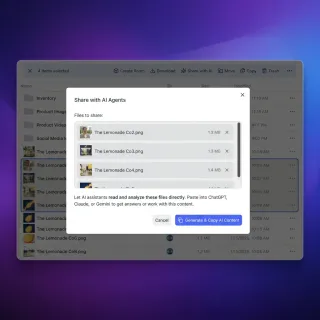
How to Set Up MCP Servers in Cursor
Cursor MCP server setup is the process of connecting Model Context Protocol servers to the Cursor AI code editor, giving its built-in AI agent access to external tools and data sources. This guide walks through every step from opening the settings UI to editing `mcp.json` by hand, with real config examples for cloud storage, databases, GitHub, and more.
Best AI Code Editors for Agent Development in 2026
AI-native code editors integrate LLMs directly into the IDE to assist with code generation, debugging, and refactoring. This guide compares the top 7 AI code editors optimized for building AI agents, with detailed analysis of agent mode capabilities, codebase comprehension, and pricing.
How to Set Up MCP Servers in VS Code
Guide to vscode mcp server setup: Model Context Protocol (MCP) servers in VS Code connect GitHub Copilot Chat to external tools and data sources, letting the AI assistant read files, query databases, and interact with APIs directly from your editor. While Claude Desktop was the first to support MCP, VS Code now offers native integration through its chat interface. This guide covers the setup process using the `.vscode/mcp.json` configuration file, security best practices, and top servers to impr

7 Best AI Code Detectors in 2026, Tested and Compared
GitHub Copilot writes 46% of code for its users, and over 80% of developers now use AI coding tools weekly. These seven code-specific detectors help engineering teams, universities, and code reviewers identify AI-generated code with accuracy rates from 90% to 98%, each optimized for different workflows and budgets.

How to Set Up MCP Servers in Windsurf (Now Devin Desktop)
Windsurf, renamed Devin Desktop in June 2026 by Cognition, supports MCP servers through its Cascade AI agent, letting you connect external tools, file storage, and APIs directly to your coding workflow. This guide walks through every step of Devin Desktop (formerly Windsurf) MCP configuration, from locating the config file to adding your first server and troubleshooting common issues.

How to Configure the Base44 GitHub App Integration
Setting up the Base44 GitHub App integration enables teams to sync visual configurations to a repository. This guide covers setup, synced code schemas, and troubleshooting manual repository updates.
All guides
7 Best AI Code Detectors in 2026, Tested and Compared
GitHub Copilot writes 46% of code for its users, and over 80% of developers now use AI coding tools weekly. These seven code-specific detectors help engineering teams, universities, and code reviewers identify AI-generated code with accuracy rates from 90% to 98%, each optimized for different workflows and budgets.

7 Best Cursor Alternatives for Developers in 2026
Cursor set the standard for AI-assisted coding, but its credit-based pricing and locked ecosystem push many developers to explore alternatives. This guide compares seven options across pricing, model flexibility, and multi-file editing quality so you can pick the right tool for how you actually write code.

A Developer Guide to the Base44 Core App Dashboard
The Base44 core app dashboard is the admin interface for managing production environment variables, database entities, and user telemetry. This guide details how to open the Base44 core app dashboard using CLI commands, manage secrets, and connect Fast.io workspaces for persistent storage.

Automating Base44 File Workflows with Webhooks
Event-driven webhooks allow Base44 applications to initiate instant downstream processing whenever users or AI agents upload media files. By extracting uploaded file URLs from Base44 webhook payloads and transferring them directly into Fast.io shared workspaces, technical teams eliminate manual document handling while maintaining indexed, queryable file storage.

Base44 Cloud Import Workflows for Enterprise Files: Implementation Guide
Base44 cloud import workflows automate the transfer of documents from cloud storage into Base44 application backends. Building an enterprise ingestion pipeline requires resilient authentication, automated sync scheduling, and a persistent storage layer.

Base44 File Storage Setup: Media Libraries and External Cloud Persistence
Base44 file storage setup involves configuring backend media libraries to store, manage, and deliver application documents. This guide walks through configuring Base44 built-in storage in four steps and demonstrates how pairing Base44 with Fast.io delivers persistent enterprise workspaces, versioning, and automated document data extraction.

Base44 Large File Upload Architecture: Chunked Transfer & Storage Staging
Base64 encoding increases file payload sizes by approximately 33%, causing memory spikes and gateway timeouts when low-code app backends process large media files [MDN Web Docs 2026]. Base44 large file upload architecture optimizes network transfer and storage staging by decoupling file transport from application servers. Implementing direct-to-cloud pre-signed URLs, client-side Blob chunking, and persistent storage staging prevents browser timeouts while maintaining end-to-end data integrity.

Base44 RAG Document Storage Architecture Guide
Base44 applications rely on stored files to feed context into AI chat components and automated workflows. Designing a two-layer RAG document storage architecture separates raw file storage from vector embeddings, ensuring data integrity, version synchronization, and higher response accuracy as your app scales.

Best AI Code Checkers: Tools for Automated Code Review and Quality
Eighty-four percent of developers now use AI tools in their workflow, but fewer than a third trust the output. This guide compares the best AI code checkers available in 2026, from PR review bots like CodeRabbit and GitHub Copilot to security-focused analyzers like Semgrep and Snyk Code, with real pricing, accuracy benchmarks, and guidance on stacking tools together.
Best AI Code Editors for Agent Development in 2026
AI-native code editors integrate LLMs directly into the IDE to assist with code generation, debugging, and refactoring. This guide compares the top 7 AI code editors optimized for building AI agents, with detailed analysis of agent mode capabilities, codebase comprehension, and pricing.

Best AI Code Review Tools in 2026: 9 Options Compared
AI code review tools analyze pull requests before a human reviewer sees the code, catching bugs, flagging security issues, and enforcing coding standards automatically. This guide compares nine dedicated PR review tools on accuracy, CI integration, pricing, and where each one fits best.

Best AI Coding Assistants in 2026: 12 Tools Compared
AI coding assistants now do far more than autocomplete. The best tools in 2026 handle multi-file refactors, run tests, manage git workflows, and spawn parallel agents for complex tasks. This guide compares 12 leading options across pricing, agentic capabilities, model flexibility, and team fit so you can pick the right one for how you actually work.

Best Lovable Alternatives in 2026: 9 Tools Compared by Use Case
Lovable hit 8 million users in its first year, but credit-based pricing and limited codebase support push many builders toward alternatives. This guide compares nine tools across prompt-to-app builders, AI code editors, and visual platforms to help you find the right fit for your next project.

Best Open Source AI Coding Assistants in 2026: OpenClaw, OpenCode, and More
Developers now spend more time reviewing AI-generated code than writing it. Choosing the right open source coding assistant determines whether those review hours are productive. This guide compares 9 actively maintained tools, from terminal agents like OpenCode and Aider to IDE extensions like Cline and Continue, covering model flexibility, self-hosting, and the workflow differences that feature tables miss.

Best Replit Alternatives in 2026
Replit crossed 50 million users in early 2026, but its February pricing overhaul pushed many developers to evaluate alternatives for the first time. This guide compares nine options across free tiers, AI agent capabilities, deployment workflows, and collaboration to help you pick the right tool.

Best Storage Solutions for Base44 Workflows
According to the Flexera 2025 State of the Cloud Report, 84% of organizations identify managing cloud spend and infrastructure complexity as a primary operational challenge in multi-cloud environments. Building applications on AI app builders like Base44 requires a clear storage strategy to prevent local asset bottlenecks and ensure multi-user persistence across external workspaces.

Building Branded Client Portals in Base44: Prompt Patterns and Storage Architecture
Base44 branded client portal sharing enables agencies to build custom secure file distribution interfaces for clients. While Base44 accelerates front-end UI generation and custom domain routing, handling large media assets and multi-tenant access controls requires combining AI app building with a dedicated storage layer. This guide breaks down prompt patterns, permission architecture, custom domain setup, and file persistence for client portals.

Cline and Other Open Source Cursor Alternatives
Cline markets 8.0M+ installs across platforms as an Apache 2.0 coding agent, which is why "open source cursor alternative" keeps drawing buyers who want model choice without a closed IDE subscription. This guide ranks the main free and self-hosted options by license, editor surface, BYOK vs billed models, and agent autonomy, then shows when open source beats Cursor and where shared workspaces fit after the agent finishes.

Cursor Teams: Setting Up Shared Workspaces for Coding Agents
Cursor Teams provides a secure environment for managing coding agents and developer workflows. A major challenge for engineering leads is managing shared rules and persistent file state across developer seats. Setting up Project Rules in the .cursor/rules directory and connecting to a persistent Fast.io workspace establishes a clean context boundary for teams.

How to Add Persistent File Storage to Replit Agent
Replit Agent can build full apps from a prompt, but its file storage resets when containers sleep.

How to Build AI Apps with GitHub Spark and Copilot
US searchers look up "github spark" about 4,400 times a month, yet many results still mix it up with Apache Spark or stop at launch-day recaps. GitHub Spark turns natural-language prompts into fullstack React apps with a managed data store, GitHub auth, AI features, and one-click deploy under GitHub Copilot plans. This guide walks from the first app at github.com/spark through Copilot agent workflows, AI credit billing, and the asset handoff teams need once the prototype is live.

How to Build an AI Code Review Agent with Fastio API
Building an AI code review agent with the Fastio API lets developers pull repository diffs into an agentic workspace for secure, persistent LLM analysis. While many tutorials rely on fragile, in-memory scripts, a dedicated workspace gives the AI enough context to review code accurately. This guide shows you how to architect and deploy a reliable AI code reviewer that works with your existing continuous integration pipeline.

How to Configure a Base44 Shared Workspace for Team Collaboration
The Stack Overflow 2026 Developer Survey reveals that 84% of developers use or plan to use AI tools, but only 29% trust their output. This guide explains how to set up a Base44 shared workspace for teams to bridge this trust gap through collaborative control. It covers role permissions, shared credit tracking, and persistent workspace integrations.
How to Configure the Base44 GitHub App Integration
Setting up the Base44 GitHub App integration enables teams to sync visual configurations to a repository. This guide covers setup, synced code schemas, and troubleshooting manual repository updates.

How to Connect Base44 to MCP Storage
Connecting Base44 to MCP storage allows local and hosted AI assistants to safely query entity schemas and data using the Model Context Protocol. This guide provides a step-by-step walkthrough for configuring the base44-mcp-server using remote and local stdio connection models. We also explore how to use Fast.io as a secure, persistent workspace layer that tracks version history and coordinates file handoffs between agents and human team members.

How to Connect Coding Agents to a Company Brain
Connecting coding assistants to an organization-wide knowledge base is critical for reducing code generation errors. Over 60% of modern software teams use AI coding assistants daily. This setup guide explains how to connect coding agents to a company brain, giving Cursor and Claude Code direct access to the shared workspaces, schemas, and collaborative notes they need.

How to Design a Base44 File Handoff Workflow
Transitioning assets from a visual development environment to client delivery portals requires a structured pipeline. This guide details how to build a Base44 file handoff workflow that automates code exports, data schema routing, and file delivery.

How to Implement Fastio API Cursor-Based Pagination
Retrieving data from a growing workspace requires a scalable approach. Cursor-based pagination in the Fastio API ensures fast, stable retrieval of large folder listings without the performance issues of offset pagination. This tutorial explains how cursors work, why they outperform traditional offsets, and how to write pagination loops that follow pagination.has_more.

How to Optimize Visual Studio Code as an AI Agent Workspace
Optimizing Visual Studio Code as an autonomous AI agent workspace requires setting strict file boundaries and execution parameters. Improper configuration can lead to AI agents reading thousands of build files, which inflates API costs by 10x. This guide details how to configure vs code agent settings, establish custom cline vscode workspace config rules, and leverage persistent cloud storage for human-agent collaboration.
How to Set Up an AI Coding Agent
An AI coding agent is an autonomous system that reads, writes, and modifies code across files while maintaining project context. This guide walks you through setting up a coding agent with persistent file access using MCP (Model Context Protocol), so your agent retains context between sessions and can work across your full codebase. You'll go from zero to a working agent in under 30 minutes.
How to Set Up MCP Servers in Cursor
Cursor MCP server setup is the process of connecting Model Context Protocol servers to the Cursor AI code editor, giving its built-in AI agent access to external tools and data sources. This guide walks through every step from opening the settings UI to editing `mcp.json` by hand, with real config examples for cloud storage, databases, GitHub, and more.
How to Set Up MCP Servers in VS Code
Guide to vscode mcp server setup: Model Context Protocol (MCP) servers in VS Code connect GitHub Copilot Chat to external tools and data sources, letting the AI assistant read files, query databases, and interact with APIs directly from your editor. While Claude Desktop was the first to support MCP, VS Code now offers native integration through its chat interface. This guide covers the setup process using the `.vscode/mcp.json` configuration file, security best practices, and top servers to impr
How to Set Up MCP Servers in Windsurf (Now Devin Desktop)
Windsurf, renamed Devin Desktop in June 2026 by Cognition, supports MCP servers through its Cascade AI agent, letting you connect external tools, file storage, and APIs directly to your coding workflow. This guide walks through every step of Devin Desktop (formerly Windsurf) MCP configuration, from locating the config file to adding your first server and troubleshooting common issues.
How to Set Up Storage for AI Coding Agents
AI coding agents like Cursor, Claude Code, and GitHub Copilot Workspace need persistent file access to read, modify, and manage codebases effectively. This guide explains the storage requirements for coding agents, compares filesystem vs API approaches, and shows how to set up infrastructure that gives agents reliable file access across sessions.

Is Base44 the Future of Vibe Coding and No-Code Development?
Wix.com acquired Base44 for 80.00 million dollars in 2025, validating the rise of vibe coding and prompt-based software creation. This guide reviews the Base44 no-code development platform, analyzes the performance of the custom Base One AI model, and compares its database infrastructure to shared file storage layers. Learn how to manage the transition from prompt-driven app sessions to production code deployments.

Understanding the Base44 Agent SDK (@base44/sdk)
This guide details how to install and initialize the Base44 Agent SDK (@base44/sdk) in external Node.js and TypeScript applications. It explains how to bridge the code-context gap, manage database entities, subscribe to real-time updates, and connect to Fast.io workspaces for persistent team storage.