Virtual Data Room Comparison: M&A Pricing, Features, and Options
An M&A virtual data room gives deal teams controlled external access, dynamic watermarking, and structured buyer Q&A, often billed per page or per deal. Smaller transactions, fundraising rounds, and client due diligence rarely need enterprise contracts when flat-rate VDRs or permissioned workspaces cover the work. This comparison breaks down virtual data room pricing, top VDR providers, security controls, and workspace options.

What Is a Virtual Data Room?
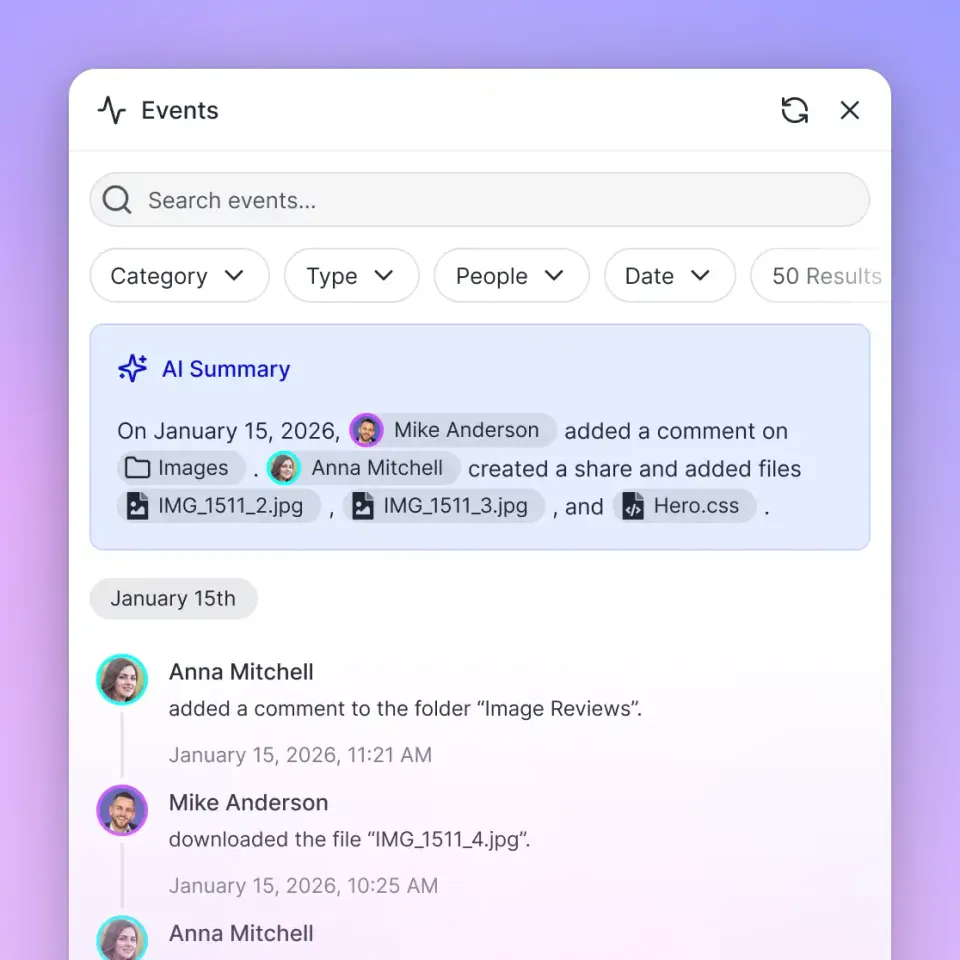
A virtual data room (VDR) is a secure online repository where businesses store and share confidential documents. Unlike general file sharing services, VDRs are built specifically for high-stakes scenarios: M&A transactions, due diligence, fundraising, IPOs, and legal proceedings. The key difference between a VDR and regular cloud storage is control. VDRs offer fine-grained permissions (view-only, no download, time-limited access), detailed audit trails showing exactly who viewed what and when, and security features like watermarking and access revocation. Most organizations use VDRs when:
- Selling or acquiring a company
- Raising capital from investors
- Managing board communications
- Handling litigation discovery
- Licensing intellectual property
Helpful references: Fastio Workspaces, Fastio Collaboration, and Fastio AI.
Related guides
- How to Set Up a Virtual Data Room for Your Next DealA virtual data room (VDR) is a secure online repository used for storing and sharing confidential documents during M&A...
- Enterprise File Transfer: A Complete Guide for IT TeamsEnterprise file transfer is how organizations move sensitive data between employees, partners, and systems while...
- How to Choose a Managed File Transfer SolutionManaged File Transfer (MFT) is a secure platform for moving sensitive files between systems, partners, and customers...
- Managed File Transfer (MFT): What It Is and Modern AlternativesManaged File Transfer (MFT) is enterprise software for securely exchanging files between organizations, with...
- How to Set Up Secure File Sharing for Your BusinessSecure file sharing for business protects company documents across internal teams, external clients, and AI agents...
- How to Set Up a Data Room for Your Startup FundraiseA startup data room is a secure online space where founders share financial documents, legal agreements, and company...
More on this subject: Security and Access Control (32 guides)
How VDR Pricing Actually Works
VDR pricing is notoriously opaque. Vendors quote different metrics, make it hard to compare, and sometimes charge per-page fees that balloon during active deals.
Common pricing models:
- Per-page pricing: Charges per page uploaded. A 10,000-page deal room costs $4,000 to $10,000 just for document storage. This model punishes thorough due diligence.
- Usage-based (per GB): Charges based on storage consumed. More predictable than per-page, but costs still scale with deal complexity.
- Per-user pricing: Common in enterprise VDRs. with costs scaling by team size, often thousands per month before storage fees.
- Flat monthly/annual fee: Fixed price regardless of pages, users, or storage. Typically several hundred dollars monthly for mid-market deals.
What enterprise VDRs actually cost:
Traditional enterprise VDRs like Intralinks and Datasite often run tens of thousands of dollars per deal, with premium service tiers offering dedicated support. For billion-dollar M&A transactions, this cost is trivial. For smaller deals, it's often overkill.
Virtual Data Room Comparison: Top Providers
Selecting a virtual data room starts with matching the platform to the structure of your transaction. A sell-side M&A virtual data room hosting competing bidders has different access and workflow demands than a single-buyer acquisition, a financing round, or an ongoing client diligence portal. Providers generally fall into three groups based on how they structure deal workflows, permissions, and billing.
Enterprise M&A Virtual Data Rooms
Intralinks, Datasite, and Ansarada are built for complex mergers, acquisitions, and restructurings where investment banks and outside counsel coordinate parallel buyer groups. These platforms focus on specialized transaction tools: structured Q&A workflows that route bidder questions to subject-matter experts, dynamic watermarking tied to viewer identity, page-level activity tracking, and dedicated deal coordinators. Pricing is typically quoted per deal or under annual enterprise agreements rather than self-serve monthly plans.
Mid-Market and Specialty VDR Providers
iDeals, ShareVault, and SecureDocs target mid-market M&A, life sciences licensing, biotech partnerships, and startup fundraising. They retain core VDR controls such as view-only document modes, dynamic watermarks, and bidder permission groups, while offering flatter monthly or annual subscription options and faster self-service room setup than traditional banking platforms.
Content Platforms and Permissioned Workspaces
Box, FileCloud, and Fastio serve organizations whose documents already live in SharePoint, Google Drive, Box, or Dropbox and who want governed sharing without spinning up a per-deal room for every project. Box and FileCloud layer data room folders, access policies, and external sharing controls onto broader enterprise storage. Fastio provides org-owned workspaces where teams and AI agents work together on deal and client files. An IT lead can use Cloud Sync to bring selected folders from Google Drive, Dropbox, Box, and OneDrive (including SharePoint document libraries through OneDrive for Business) into a dedicated workspace on a schedule or on demand, one-way or two-way, without migrating the source drive. External parties review documents through branded portals and shares that need no guest account and support passwords, expiring links, and disabled downloads, while internal teams and connected AI assistants use hybrid search and Metadata Views to query contracts inside that workspace scope.



Start with virtual data rooms comparison on Fastio
Get secure file sharing with fine-grained permissions, detailed audit trails, and flat-rate pricing.
How to Evaluate a Virtual Data Room
When comparing VDRs, focus on these categories:
Security Features
The basics every VDR should have:
- Encryption: industry-leading encryption at rest and secure transmission in transit
- Two-factor authentication (2FA): Required for all users
- Fine-grained permissions: Control at folder, document, and page level
- Dynamic watermarking: Overlay viewer identity on documents
- Access revocation: Instantly cut off access to downloaded files
Ask about:
- Can you revoke access to files after they've been downloaded?
- What happens if a user screenshots a document?
- How are permissions inherited across folder hierarchies?
Audit and Reporting
You need complete visibility into who accessed what:
- View/download/print activity by user and document
- Time spent on each page (engagement analytics)
- IP address and device tracking
- Exportable reports for legal compliance
User Experience
A VDR is useless if buyers refuse to use it:
- How fast can external users get access? (Hours vs. days)
- Do reviewers need to install software or plugins?
- Is the interface intuitive for non-technical users?
- Does it work well on mobile devices?
Pricing Transparency
Red flags in VDR pricing:
- Per-page fees that scale unpredictably
- Hidden costs for "premium" features
- Overage charges that appear mid-deal
- Long-term contracts with auto-renewal
Green flags:
- Transparent pricing on the website
- Flat monthly or annual fee
- Unlimited users included
- Clear storage limits upfront
Virtual Data Room Features Comparison Table
Here's how the major VDR providers compare across key features:
Note: Features and pricing change frequently. Always verify current offerings directly with vendors before committing.
When You Need an M&A Virtual Data Room vs. a Workspace
Not every deal requires an enterprise-priced data room. Deciding between a dedicated M&A virtual data room and a permissioned cloud workspace comes down to whether your transaction needs bidder surveillance and formal Q&A routing or scoped collaboration over shared deal files.
A traditional VDR makes sense when:
- Multiple competing bidders need simultaneous access with strict separation between buyer groups
- Deal counsel requires dynamic watermarking, page-level viewing reports, and a formal bidder Q&A module
- You want vendor-managed room indexing and dedicated deal support teams
A permissioned workspace like Fastio fits when:
- You are running single-buyer diligence, seed or Series A fundraising, legal matters, or ongoing client engagements
- Deal documents live in SharePoint, Google Drive, Box, or Dropbox and you need to sync only specific folders into a scoped workspace without reorganizing your primary drive
- Your team uses Claude, ChatGPT, or coding agents over the Fastio MCP server and needs the AI restricted to one deal workspace rather than your entire cloud drive
- Reviewers need in-browser previews of PDFs, spreadsheets, images, and video, anchored comments on specific PDF pages, per-file version history, and advisory file locks
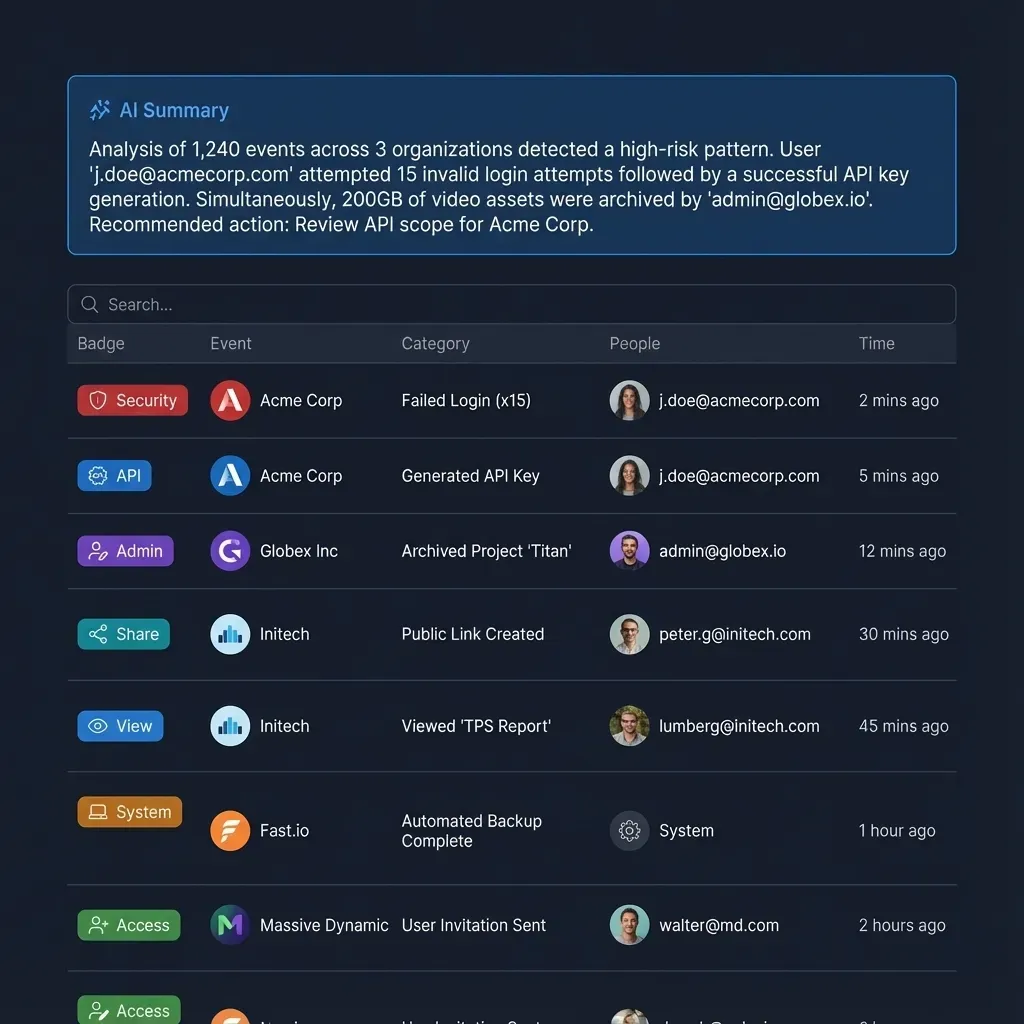
Dedicated VDRs are purpose-built for dynamic watermarking, formal bidder Q&A routing, and page-by-page viewer tracking. For transactions that do not require those specialized bidder controls, Fastio provides a governed workspace with data room features and plan-based billing, with seats and storage included and AI work metered in credits. Fastio protects deal files with encryption in transit and at rest, role-based permissions set per organization, workspace, and share, and a detailed activity log that records uploads, edits, moves, deletions, membership changes, and share creation. Teams can extract key dates and counterparties across diligence files using Metadata Views, collect executed agreements with built-in e-signature (including sequential or parallel signers, optional passcodes, and an audit certificate recording each signer's IP address and browser), and use ownership transfer when an agent that builds an organization hands it to a client with a claim link. Monthly plans start with a 14-day free trial (credit card required); see Fastio pricing for current plan options.
Questions to Ask Before Choosing a VDR
Before signing a contract, get clear answers to these questions:
About pricing:
- What's the total cost for a typical deal in my size range?
- Are there per-page, per-user, or overage fees?
- What happens if the deal takes longer than expected?
- Can I pause billing between deals?
About security:
- What certifications do you hold?
- How do you handle security incidents?
- Can I get a copy of your security audit reports?
About support:
- What's included in the base price?
- Is setup self-service or managed?
- What are response times for technical issues?
- Do you offer training for my team?
About flexibility:
- How quickly can I set up a new data room?
- Can I export my data if I switch providers?
- What integrations are available (Salesforce, DocuSign, etc.)?
- Is there a free trial or pilot period?
Sources
References used to verify factual claims in this guide.
-
A 10,000-page deal room costs $4,000 to $10,000 just for document storage
-
Enterprise VDRs like Intralinks and Datasite cost $15,000 to $50,000+ per deal
-
Modern VDRs like ShareVault and SecureDocs offer similar security at 70-90% lower cost
-
Not every deal requires an enterprise-priced data room.
-
VDR pricing ranges up to $50,000+ per deal for enterprise solutions.
-
Flat-rate mid-market VDRs typically cost $500-2,000/month.
-
Per-page pricing can exceed $1/page, making a 10,000-page data room cost $10,000 or more.
Frequently Asked Questions
What is the best virtual data room?
The best VDR depends on your deal size and budget. For large enterprise M&A, Intralinks and Datasite are common choices. For mid-market deals, iDeals and ShareVault offer strong features at lower cost. Startups and small deals often choose SecureDocs or modern platforms like Fastio that offer data room features without enterprise pricing.
How much do virtual data rooms cost?
VDR pricing ranges from basic flat-rate plans to $50,000+ per deal for enterprise solutions. Flat-rate mid-market VDRs typically cost $500-2,000/month. Per-page pricing can exceed $1/page, making a 10,000-page data room cost $10,000 or more. Always calculate total cost based on your expected document volume and deal timeline.
What are the top virtual data room providers?
Top enterprise providers include Intralinks (SS&C), Datasite, and Ansarada. Mid-market leaders include iDeals, ShareVault, and SecureDocs. Modern alternatives like Fastio offer data room functionality with flat-rate pricing and AI-powered features. The right choice depends on deal complexity, budget, and required features.
What should I look for in a virtual data room?
Focus on five areas: security (advanced encryption, 2FA, dynamic watermarks), permissions (control at folder and document level), audit trails (detailed activity logs with engagement analytics), usability (fast setup, no plugins required for viewers), and pricing transparency (flat fees over per-page or hidden costs).
Are virtual data rooms better than Dropbox for M&A?
Yes, for M&A and due diligence. Consumer file sharing services lack the fine-grained permissions, detailed audit trails, and access control features required for deal management. VDRs offer view-only modes, dynamic watermarking, page-level activity tracking, and instant access revocation that general cloud storage doesn't provide.
Can I use a virtual data room for fundraising?
Virtual data rooms are widely used for Series A and later fundraising rounds. They let you share financials, cap tables, and corporate documents with prospective investors in an organized structure. For seed rounds or smaller raises with known investors, a permissioned workspace or branded client portal with expiring links, password protection, and disabled downloads often covers the diligence process without per-deal VDR fees.
Related Resources

Start with virtual data rooms comparison on Fastio
Get secure file sharing with fine-grained permissions, detailed audit trails, and flat-rate pricing.