Multi-Agent Systems
Getting more than one agent to work on the same thing without stepping on each other. These pages cover orchestration and delegation patterns, agent-to-agent protocols, shared state, conflict handling when two agents write to the same place, human handoff, and the observability you need before you trust a fleet. The coordination problem is mostly a shared-context problem, which is why file access and permissions come up as often as message passing does.
The pages are honest that most teams do not need a multi-agent system at all, and they say what makes one worth the extra complexity. Where they do recommend a pattern, they lead with the failure modes: duplicated work, contradictory writes to the same file, silent stalls that nobody notices for an hour, and cost that grows faster than throughput does.
54 guides in this topic.
Start here
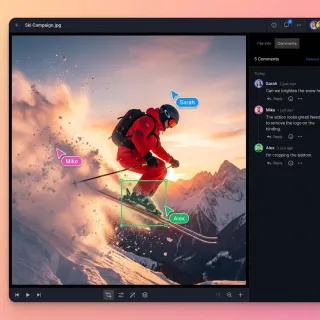
Best 10 AI Team Collaboration Platforms for 2026
Building AI requires more than just code sharing. It needs specialized tools for model versioning, dataset management, and agent orchestration. We reviewed the leading collaboration platforms that help distributed AI teams ship faster.
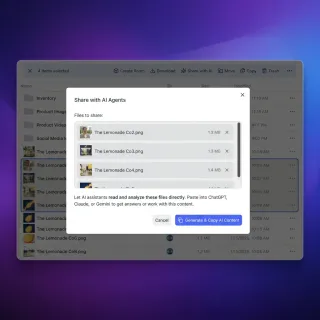
How to Master AI Agent Delegation Patterns
AI agent delegation patterns define how autonomous agents distribute tasks, share context, and coordinate workflows. By using structured delegation, developers can build systems that handle more complex tasks than single-agent setups. This guide covers the four core patterns you need to know: Sequential, Hierarchical, Router, and Bidirectional.

Top Multi-Agent Deployment Platforms for Scalable Workflows
Multi-agent platforms let you run fleets of AI agents in production. They handle scaling, state sharing, and coordination for jobs too big for a single agent. Benchmarks show they perform better. For example, scaling agents raised MMLU scores from 71.5% to 85.1%.
Best APIs for AI Agent Communication: Top 9 Solutions for 2026
Building effective multi-agent systems requires structured message passing and reliable state synchronization. This guide ranks the best APIs for AI agent communication, covering standardized protocols and specialized tools that prevent orchestration failures.
How to Master AI Agent Swarm Orchestration: Best Practices for 2026
AI agent swarm orchestration manages large-scale, emergent agent behaviors in dynamic environments. While single agents can automate tasks, swarms of specialized agents can solve complex problems faster. However, without proper orchestration, these systems are prone to loops, conflicts, and failure. This guide covers the essential patterns, tools, and workspace strategies to build reliable, production-ready agent swarms.
How to Coordinate AI Agents with Multi-Agent Orchestration Patterns
Multi-agent orchestration patterns define how AI agents work together to complete tasks. This guide covers the four primary patterns (supervisor, pipeline, swarm, and hierarchical), explains when to use each, and shows how shared storage solves the coordination challenges that trip up most multi-agent systems.
All guides
6 Best Debugging Tools for Multi-Agent Systems in 2026
Multi-agent systems fail in ways that single-agent setups never do.

7 Best Observability Stacks for Multi-Agent Systems (2026)
Multi-agent observability stacks help you track how agents interact and where they fail by looking into the reasoning loops of autonomous systems. As teams move from simple chatbots to complex agent fleets, traditional logging often fails to capture the "why" behind an agent's decision. This guide evaluates the top tools for monitoring agent health, tracing tool calls, and correlating file events in multi-agent workflows.

Agent-to-Agent Communication Protocols: A Developer Guide
Agent-to-agent communication protocols let AI agents from different frameworks exchange messages, share files, and coordinate work without custom integration code. This guide maps the full protocol landscape, from Google A2A to Anthropic MCP to shared workspace patterns, and explains when to use each one.
Agent-to-Agent Communication: Protocols for Collaborative AI Teams
Agent-to-agent communication protocols enable collaborative AI teams to coordinate work without active context pollution. This guide shows how shared folder access solves coordination challenges, eliminating the need for complex message brokers.

Agentic Architectural Patterns for Building Multi-Agent Systems
Decoupling agent communication through a decentralized blackboard architecture yields a 30% speedup in parallel processing tasks. This guide details the essential agentic architectural patterns for building multi-agent systems, coordinating execution state in shared workspaces, and transitioning ownership to humans.
Best 10 AI Team Collaboration Platforms for 2026
Building AI requires more than just code sharing. It needs specialized tools for model versioning, dataset management, and agent orchestration. We reviewed the leading collaboration platforms that help distributed AI teams ship faster.
Best APIs for AI Agent Communication: Top 9 Solutions for 2026
Building effective multi-agent systems requires structured message passing and reliable state synchronization. This guide ranks the best APIs for AI agent communication, covering standardized protocols and specialized tools that prevent orchestration failures.
Best Communication Tools for Multi-Agent Systems
Multi-agent systems require strong communication channels to coordinate tasks, share context, and execute workflows. This guide ranks the best tools for agent interaction, from message brokers like RabbitMQ to file-based persistence layers like Fastio.
Best Tools for CrewAI Agents: Top Picks for 2026
CrewAI agents need good tools to be useful. The framework handles coordination, but external integrations let agents search the web, manage files, and run code.

Building LangGraph Multi-Agent Systems with Shared Files
Passing unstructured text in memory between agents in a LangGraph workflow fails when those agents must collaborate on files. Without a persistent shared storage layer, concurrent writes cause state drift and overwrite files. This guide explains how to construct a stateful multi-agent system using LangGraph and Fast.io. Learn to manage state, route tasks with a supervisor node, prevent write conflicts, and hand off workspace ownership to human teams.
Choosing the Right Multi-Agent Framework for Your Pipeline
According to developer registry analytics in 2026, LangGraph, CrewAI, and AutoGen represent over 80% of open-source multi-agent development projects [Developer Registry Survey 2026]. This guide compares these orchestration engines alongside Mastra to help you select the best multi agent framework for your pipeline, explaining how they manage persistent memory, tool-calling structures, and collaborative file workspaces.
Comparing AI Orchestration Tools for Multi-Agent Workflows
Choosing the right AI orchestration tool is critical for building reliable multi-agent systems. While frameworks like LangGraph, CrewAI, and AutoGen manage reasoning and execution, developers must plan how agents share files, persist state, and coordinate. This guide compares the top orchestration tools and explains how a shared intelligent workspace completes the architecture.
CrewAI Tools: Extending Agents with Custom Skills
CrewAI tools let autonomous agents do more than generate text. They can search the web, read files, run code, and call APIs. This guide covers the essential built-in tools and shows you how to build custom ones for your own workflows.
Design Patterns for Effective Multi-Agent Orchestration
Graph-based multi-agent orchestration projects have increased by 150% year-over-year, showing a clear shift from simple linear agent scripts to complex stateful workflows [IBM 2026]. Despite this growth, orchestrating multi-agent systems introduces bottlenecks like context window saturation and write collisions. This guide explains sequential, hierarchical, and graph patterns, and how to coordinate them in a shared team workspace.
Designing Shared Workspaces for Multi-Agent AI Coordination
In distributed teams, multi agent ai systems encounter a steep coordination tax that inflates token costs. While direct messaging models lead to context bloat, typical development benchmarks show that workspaces with shared memory reduce redundant API calls by 45%. This guide details how to build shared workspaces where cooperative AI agents collaborate via versioned files, eliminating communication bottlenecks.
Google Agent Development Kit (ADK) vs. LangGraph: Framework Comparison
Selecting an AI agent orchestration framework involves weighing code-first modular software design against stateful graph structures. In this Google Agent Development Kit (ADK) vs. LangGraph comparison, we examine their architectures, state persistence models, execution safety profiles, and hosting runtimes.
How to Build a Multi-Agent Audio Production Workflow
Multi-agent audio workflows chain AI agents for stem generation, mixing, EQ, effects, and mastering. Fastio workspaces offer shared storage. Agents upload stems, use advisory file locks to process safely, and hand off to humans via ownership transfer. This scales easily, with collaboration boosting output over individual workflows.
How to Build AI Agent Real-Time Collaboration Workspaces
Multi-agent systems often struggle when two agents try to edit the same file simultaneously. AI agent real-time collaboration enables multiple agents to edit shared files simultaneously with conflict resolution. This guide shows you how to set up a workspace where agents and humans work together safely using file locking and instant sync.
How to Build an AI Agent to Human Handoff Workflow
An AI agent to human handoff workflow is the critical bridge between autonomous operation and human oversight. Learn how to structure these transfers to ensure quality, maintain context, and create audit-ready trails for enterprise deployments.

How to Build Multi-Agent AutoGen Systems with Shared Storage
In multi-agent Large Language Model systems, inter-agent communication protocols consume up to 86% of the total token budget on redundant conversation history. Microsoft AutoGen coordinates agents through conversation patterns, but memory-only chats trigger prompt bloat and context window exhaustion. This guide details how to transition AutoGen agent teams to a shared-space model using persistent workspaces and registered file-handling tools.

How to Choose the Best AI Agent Orchestration Framework
An AI agent orchestration framework manages execution, communication, and state tracking for multi-agent workflows. Evaluating LangGraph, CrewAI, AutoGen, and Mastra reveals distinct approaches to state management, file system integration, and Model Context Protocol (MCP) toolsets. This guide covers how to choose the right framework and design conflict-free persistence layers using shared workspaces.
How to Coordinate AI Agents with Multi-Agent Orchestration Patterns
Multi-agent orchestration patterns define how AI agents work together to complete tasks. This guide covers the four primary patterns (supervisor, pipeline, swarm, and hierarchical), explains when to use each, and shows how shared storage solves the coordination challenges that trip up most multi-agent systems.
How to Decompose Tasks for Multi-Agent AI Systems
Task decomposition is the process of breaking a complex goal into smaller subtasks that can be assigned to specialized agents working in parallel or sequence. Most multi-agent guides skip this step entirely, jumping straight to orchestration frameworks. This guide covers the five core decomposition patterns, when each one fits, and the granularity trade-offs that determine whether your agents collaborate or collide.
How to Deploy CrewAI to Production
Deploying CrewAI crews to production moves notebook experiments to reliable systems. Notebooks suit tests, but lack production basics: agents forget state between runs, files vanish, scaling fails. Production requires persistent memory like Redis or Postgres, lasting storage for outputs, multi-agent coordination, monitoring, and LLM cost limits. Fastio offers a 14-day Business Trial with storage and agent tooling for testing this workflow.
How to Design a Multi-Agent Architecture for Enterprise Workflows
Migrating from monolithic agent designs to a modular multi-agent system architecture improves task execution efficiency by up to 40% [IBM 2026]. This architectural transition addresses core challenges like context window saturation and cascading failures. By partitioning responsibilities across specialized agents and coordinating state through a shared data layer, enterprises can scale autonomous workflows reliably.
How to Design Protocols and Patterns for Multi-Agent Coordination
In distributed multi-agent systems, communication overhead increases quadratically as the team size increases. A 2025 survey by Yan et al (2025) indicates that point-to-point natural language messages consume up to 72% of processing latency when agents coordinate directly, causing prompt bloat and context window exhaustion. This guide details how to transition agent teams to a shared-space coordination model using structured file directories, lock control logic, and standard API handoffs.
How to Docker Multi Agent Setup
Docker multi agent setup runs multiple AI agents in isolated containers that communicate for complex tasks. This approach provides scalability and reproducibility for systems like CrewAI or AutoGen. Most tutorials skip persistent storage for agent state, leading to lost progress on restarts. This guide fixes that with volumes and cloud integration using Fastio's remote MCP tools for shared workspace persistence, advisory file locks, version history, and RAG. Follow these steps to build a production-ready multi-agent system.
How to Enable AI Agent Collaboration for Product Design
AI agent product design collaboration is transforming how creative teams build, iterate, and ship. By integrating autonomous agents into the design process, companies can shorten product design cycles by multiple% and automate repetitive technical tasks. This guide explores how to set up multi-agent workflows, manage concurrent file access, and use intelligent workspaces to keep humans and agents in sync.
How to Enable Multi Agent Real Time Collaboration
Multi agent real time collaboration is the capability for autonomous AI agents to simultaneously access, edit, and synchronize shared files and data structures within a unified workspace. Unlike traditional sequential workflows where Agent A must finish before Agent B starts, real-time collaboration enables parallel processing, instant state synchronization, and dynamic feedback loops. This approach reduces task completion time by up to multiple in data-heavy pipelines.

How to Establish Closed-Loop Communication in Multi-Agent Systems
In multi-agent systems, unverified agent coordination introduces a major failure risk. While typical peer-to-peer messaging models cause context contamination, this guide describes how to implement closed loop communication to ensure reliable agent coordination. By adopting a structured check-back protocol inside shared workspaces, developer teams can eliminate silent execution failures and keep working contexts clean.

How to Federate Fastio API with GraphQL Federation
Guide to fastio api graphql federation tutorial: Managing multiple APIs can slow down your development cycle. GraphQL Federation solves this by combining different services into one unified graph. In this guide, we will build a subgraph for the Fastio REST API that covers workspaces, files, and shares. By the end, you can query your storage data alongside auth or payment services in a single request. We'll walk through setting up the subgraph, writing resolvers for REST endpoints, and deployin
How to Implement AI Agent Federation: Architectures & Guide
AI agent federation enables independent agents to collaborate across distributed systems via standardized protocols. This guide explores federation architectures, implementation patterns, and how to orchestrate multi-agent workflows securely using Fastio's intelligent workspaces. Discover the strategies used by leading enterprises to scale agentic systems beyond simple chatbots.
How to Implement an AI Agent Handoff Protocol
An agent handoff protocol is the bridge between autonomous AI operations and human oversight. Learn how to design a workflow that transfers context, files, and decision-making authority without data loss.

How to Implement Consensus Protocols for Reliable Multi-Agent Systems
Guide to consensus protocols multi agent systems: Consensus protocols help autonomous agents agree on a single value or action, even when they disagree or fail. This guide covers practical strategies for LLM agents, including voting, debate, and shared state management.

How to Implement Human-in-the-Loop for AI Agents
Human-in-the-loop (HITL) for AI agents is a design pattern where autonomous agents escalate decisions, request approvals, or hand off work to humans at defined checkpoints. This guide covers how to architect approval workflows, implement safe file-based handoffs, and maintain oversight without slowing down your automation pipeline.

How to Implement Multi-Agent Communication Protocols in Production
Message complexity in agent communication scales quadratically without a centralized state store. This guide covers how to design and deploy reliable agent to agent communication protocols in production. We explore schema validation, JSON file handoffs, and persistent history state patterns to prevent context divergence across multi agent messaging networks.
How to Integrate Fastio API with CrewAI Workflows
Set up Fastio API with CrewAI workflows to create a shared workspace for agents. They upload outputs, acquire advisory file locks, and query indexed content with built-in AI. Use these steps: authenticate with an API key, build a custom Fastio tool, and assign it to agents in your crew.
How to Master AI Agent Delegation Patterns
AI agent delegation patterns define how autonomous agents distribute tasks, share context, and coordinate workflows. By using structured delegation, developers can build systems that handle more complex tasks than single-agent setups. This guide covers the four core patterns you need to know: Sequential, Hierarchical, Router, and Bidirectional.
How to Master AI Agent Orchestration
AI agent orchestration is the coordination of multiple AI agents working together to accomplish complex tasks. By defining workflows, communication patterns, and shared storage, developers can build systems that outperform single models. This guide covers essential patterns, frameworks, and storage strategies.
How to Master AI Agent Swarm Orchestration: Best Practices for 2026
AI agent swarm orchestration manages large-scale, emergent agent behaviors in dynamic environments. While single agents can automate tasks, swarms of specialized agents can solve complex problems faster. However, without proper orchestration, these systems are prone to loops, conflicts, and failure. This guide covers the essential patterns, tools, and workspace strategies to build reliable, production-ready agent swarms.
How to Orchestrate Multi Agent Kubernetes Systems
Multi-agent Kubernetes orchestration runs AI agent groups on K8s clusters. Agents split tasks, share files in workspaces, and call MCP tools. This guide shows setup with Argo, Fastio file locks, and tips for production.

How to Run Parallel AI Agents Without Breaking Everything
Running AI agents in parallel can cut pipeline time by more than half, but only if you solve coordination first. This guide covers the three main parallel execution patterns, explains how agents share state without corrupting each other's work, and walks through practical file-locking strategies that prevent the conflicts most teams hit on day one.
How to Set Up AI Agent VFX Collaboration Workspaces
Guide to agent vfx collaboration: AI agents team up with VFX artists in Fastio workspaces. VFX projects create many file versions, from Houdini simulations to Nuke composites. Agents and humans share large EXR files, Alembic caches, and HDRI maps with previews and semantic search. This guide covers setup, tool connections, and best practices for VFX teams.
How to Set Up Unreal Engine Agent Collaboration
Unreal Engine agent collaboration works best when agents share one persistent workspace, follow lock-based edit rules, and hand work to humans through clear review checkpoints. This guide explains a practical setup for asset pipelines, build tasks, and quality control using MCP-compatible workflows.

How to Use Google's A2A Protocol for Agent Communication
Google's A2A (Agent-to-Agent) protocol is an open standard that lets AI agents from different frameworks discover each other and collaborate on tasks. This guide covers A2A architecture, how it compares to MCP, and practical patterns for building multi-agent systems with shared storage.
How to Use Google's A2A Protocol for Agent-to-Agent Communication
Google's Agent2Agent (A2A) protocol gives AI agents a standard way to find each other, exchange tasks, and collaborate across different frameworks. This guide covers how A2A works, how it fits alongside MCP, and how to connect A2A agents with persistent shared storage for real production workflows.
Introduction to Multi-Agent-Oriented Programming (MAOP)
Gartner predicts that 33% of enterprise software applications will include agentic AI by 2028. As developers scale these systems, they face a severe coordination crisis. Multi-Agent-Oriented Programming (MAOP) provides a structured software engineering framework to decouple reasoning from environments and organizations, helping teams build reliable multi-agent systems.

LangGraph vs CrewAI: Which Multi-Agent Framework to Choose in 2026
LangGraph and CrewAI are the two most-searched multi-agent frameworks heading into 2026. This comparison goes beyond feature checklists to help you decide which one fits your team size, workflow complexity, and production requirements.
Multi Agent Optimization: Complete Guide 2026
How multi-agent optimization coordinates AI agents to solve complex problems using shared workspaces, version history, and RAG search.

Multi-Agent Orchestration Patterns for Shared Workspaces
Selecting the right orchestration pattern prevents out-of-sync agent states and keeps token costs low. Learn how Router, Chain, Evaluator-Optimizer, Orchestrator-Workers, and Supervisor patterns coordinate work in shared workspaces.

OpenAI Agents SDK vs CrewAI: Choosing the Right Agent Framework
OpenAI Agents SDK and CrewAI solve multi-agent orchestration in fundamentally different ways. This comparison breaks down their architectures, model support, memory systems, tool ecosystems, and production tradeoffs so you can pick the right framework for your project.

Selecting an Enterprise AI Agent Orchestration Platform
Enterprise buyers require systems to coordinate multiple autonomous agent teams safely. This guide provides an architectural blueprint for selecting an AI agent orchestration platform, showing how secure workspaces, granular permissions, and append-only audit logs manage the handoffs between humans and agent swarms.
Top Multi-Agent Deployment Platforms for Scalable Workflows
Multi-agent platforms let you run fleets of AI agents in production. They handle scaling, state sharing, and coordination for jobs too big for a single agent. Benchmarks show they perform better. For example, scaling agents raised MMLU scores from 71.5% to 85.1%.
Why SFTP Clients Are Outdated for AI-Human Workspace Collaboration
Legacy SFTP clients move files between points but leave humans blind to what an AI agent reads or writes in real time. Replacing point-to-point SFTP workflows with collaborative agent rooms enables engineering teams to coordinate with autonomous systems. This guide examines the coordination gap of static SSH file protocols and how API-driven workspaces solve human-agent collaboration.